Best Freeletics Alternative for Real Calisthenics (2026)
Freeletics is excellent HIIT, but it isn't real calisthenics. Here's the best alternative for building skills, strength, and mobility long-term.
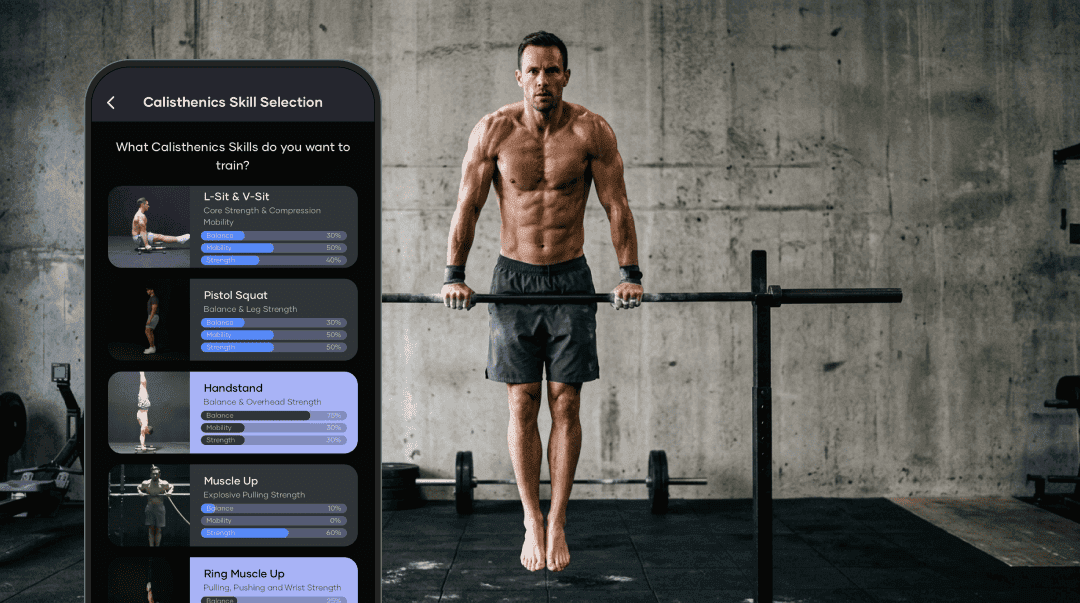
If you tried Freeletics and walked away sweaty but no closer to a handstand or muscle-up, that gap is by design. Freeletics is a HIIT and conditioning coach, not a calisthenics skill program, and that distinction decides which app you actually need.
What Freeletics actually is (and what it's good at)
Freeletics is one of the best bodyweight HIIT coaches on the market, and it deserves credit for that. It's an AI-driven app built around high-intensity interval training and functional conditioning (burpees, jumping squats, high-rep circuits) that adapts difficulty based on how you rate each session afterward. The more you train, the more the coach tunes intensity and volume to your feedback.
For general fitness, fat loss, and travel-friendly training, it works. You need no equipment, sessions are short and brutal, and the active community keeps motivation high. The free tier gives you a set of standalone HIIT workouts, while the Freeletics Coach subscription costs $34.99 per month or $99.99 per year, according to the Freeletics App Store listing and reviews like Fitness Drum.
So Freeletics is genuinely good at what it's designed for: making you sweat, raising your conditioning, and burning calories with minimal setup. The problem only appears when you ask it to do something it was never built for: teach you a skill.
Is Freeletics real calisthenics, or just HIIT?
Freeletics is HIIT, not calisthenics, even though both use your bodyweight. The confusion is understandable because the equipment looks identical: no machines, just you and the floor. But the programming is opposite, and programming is what determines results.
Calisthenics as a discipline is about acquiring skills and maximal relative strength through deliberate progressions. HIIT is about metabolic conditioning through high-rep, time-based circuits. These two goals demand opposite training variables: rep ranges, rest periods, and how you progress are all different. Reviewers like Fitloop and Titans Grip explicitly note that Freeletics is "not optimized for advanced calisthenics skills," steering skill-focused trainees toward specialist apps.
| Variable | HIIT / conditioning (Freeletics) | Skill-and-strength calisthenics |
|---|---|---|
| Primary goal | Burn, sweat, general fitness | Skills + maximal relative strength |
| Rep ranges | High reps, timed circuits | Low reps, high quality |
| Rest | Short, kept intentionally minimal | Full recovery between hard sets |
| Progression | Adapts intensity from ratings | Swaps to a harder skill variation |
| Outcome | Conditioning, fat loss | Handstand, muscle-up, planche, real strength |
The mechanical reason matters. You cannot rush a skill with more rounds and less rest. A handstand or planche is built through low-rep, high-quality practice toward a specific position: the exact opposite of a fatigue-driven conditioning circuit.
Where Freeletics falls short for skills and long-term strength
For a calisthenics-minded trainee, Freeletics has structural gaps that no amount of AI tuning closes. It's not a flaw in the app: it's simply outside its purpose. Here's where it leaves skill-focused users wanting more:
- No real skill progressions. There's no prerequisite-mapped path toward the handstand, muscle-up, planche, or front lever: the skills most people start calisthenics to learn.
- High-impact, repetitive jumping. Many users find the constant jumping squats and burpees joint-unfriendly over time, and the session variety can feel repetitive.
- Limited maximal-strength and hypertrophy progression. The conditioning bias means you rarely train in the low-rep, high-tension ranges that build raw strength and visible muscle.
- Mobility treated as warm-up filler. Freeletics uses light mobility to prep a session, never as a trained goal with its own progression toward splits or deep positions.
- Billing friction. Some users report auto-renewal and cancellation complaints: worth knowing before you commit to an annual plan.
None of this makes Freeletics bad. It makes it the wrong tool if your goal is skills and long-term strength rather than conditioning.
What to look for in a real calisthenics app
A real calisthenics app is built around progression, not just workouts. If you want to learn skills and get genuinely strong, judge any app against this checklist, and notice how naturally it favors a structured skill-tree system over an adaptive HIIT coach:
- Demand structured skill progressions with prerequisites. Every skill should have a mapped path from your current level to the full movement. A good muscle-up progression starts with the basics and only advances when you've earned it.
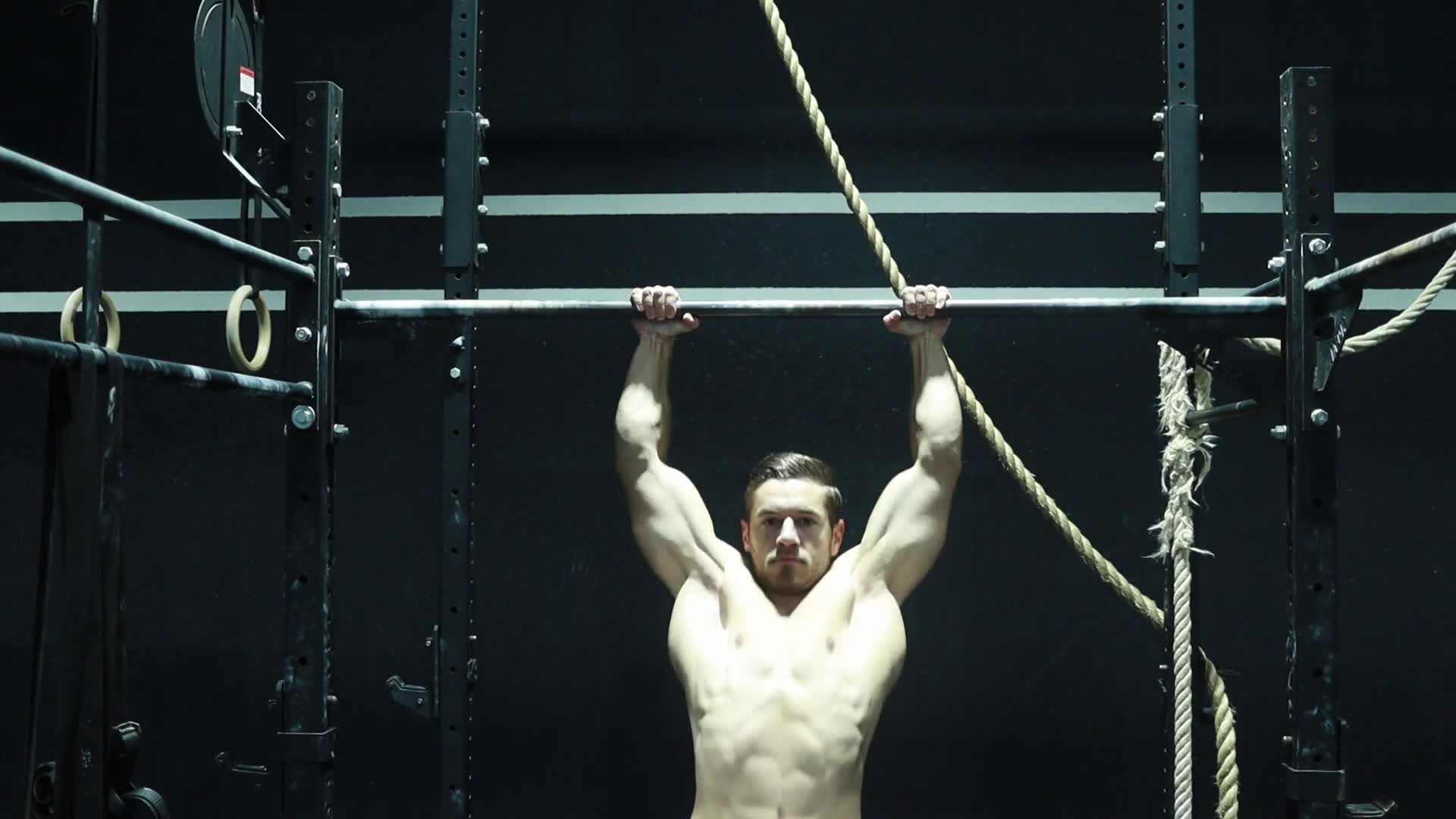
Muscle Up Progressions
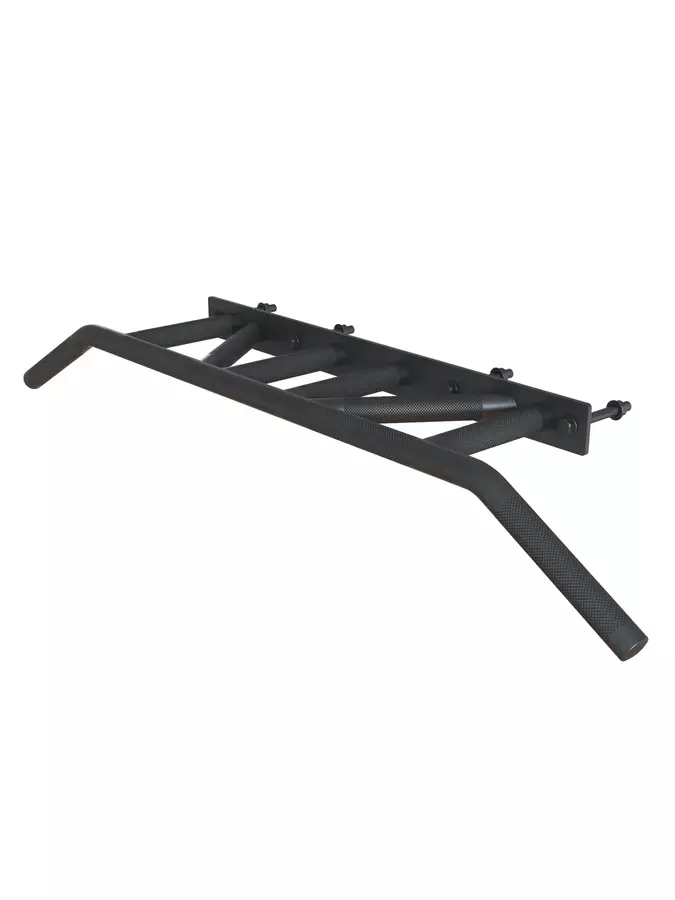
Start by standing behind the bar. Jump to the bar such that you swing forward, into a slightly arched back position
→ - Insist on real strength foundations. Skills sit on top of pulling and pushing strength, so the app should progress your fundamentals seriously, not just circuit them.
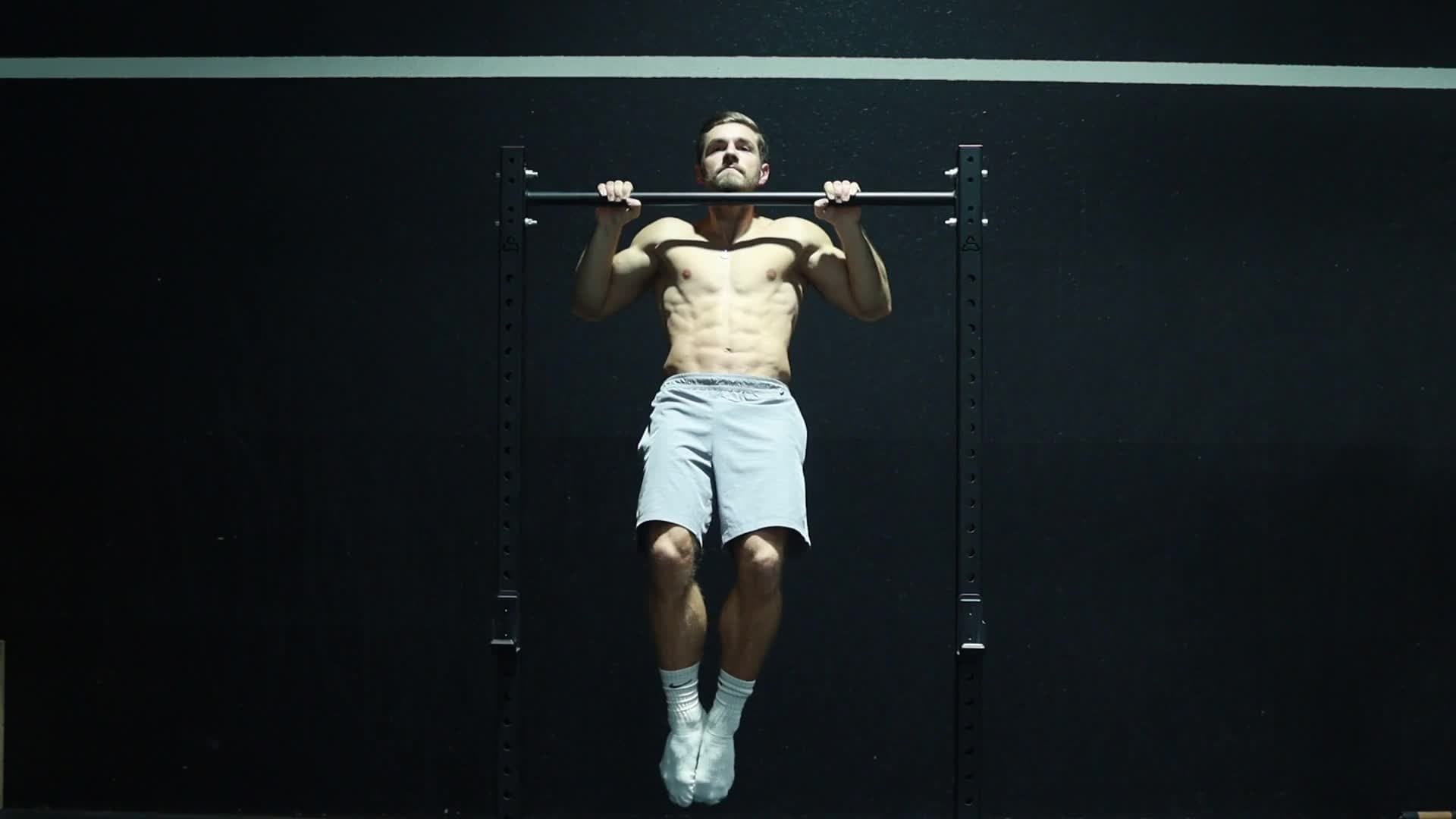
Pull Up Progressions
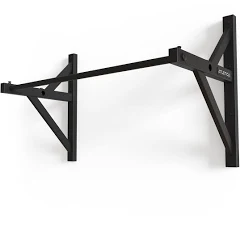
Start from a dead hang with arms fully extended: use a shoulder-width overhand (pronated) grip. Initiate by depressing and retracting the shoulder blades (scapular pull) before bending the arms
→ - Require dedicated handstand work. Balance skills need their own deliberate practice, not a token appearance in a conditioning round.
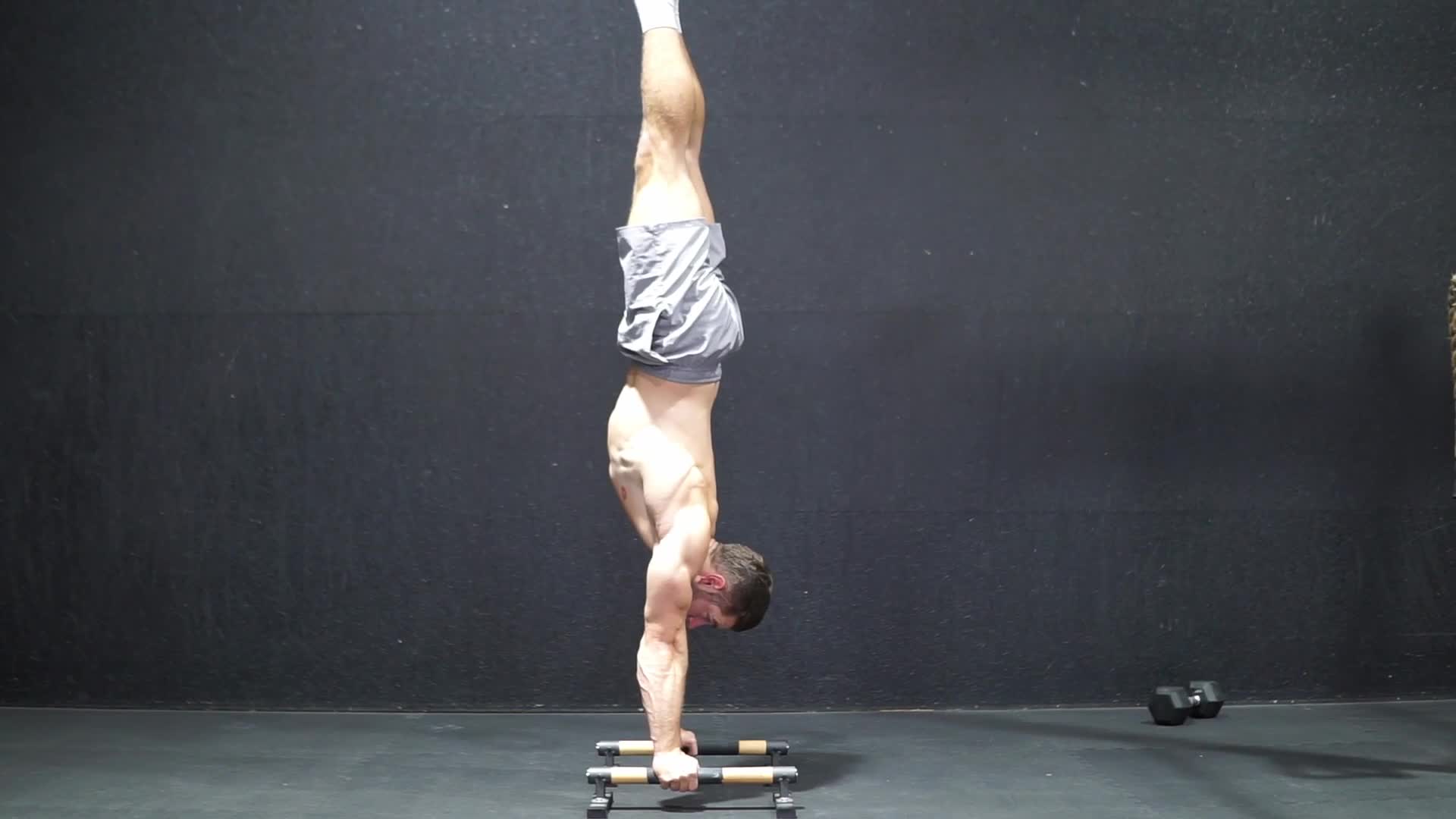
Freestanding Handstand Practice
Start near a wall to build confidence and technique. Place your hands shoulder-width apart on the floor, fingers spread
→ - Check for periodized strength and hypertrophy: proper blocks that build muscle and maximal strength, with planned deloads, not endless conditioning.
- Confirm equipment-adaptive programming that scales from nothing, to a bar, to rings, to a full gym.
- Look for integrated mobility trained as its own goal, plus progressive-overload guidance that adapts as you advance.
You can also browse a muscle-up progression or explore handstand training to see what a real progression tree looks like before you commit to any app.
The best Freeletics alternative: Simple Calisthenics
Simple Calisthenics is the alternative that meets every item on that checklist, point for point. It's purpose-built for the reader who outgrew HIIT and wants to actually learn calisthenics, and it does it through a skill-tree progression system rather than an adaptive conditioning coach.
Setup takes four steps: you set your goals, your equipment, your level, and your schedule. From there the program builds around you and adapts as you improve. Here's how its features map to the needs above:
- Skill-tree progressions that start at your current level and automatically swap in harder variations as you get stronger: including the planche and front lever.
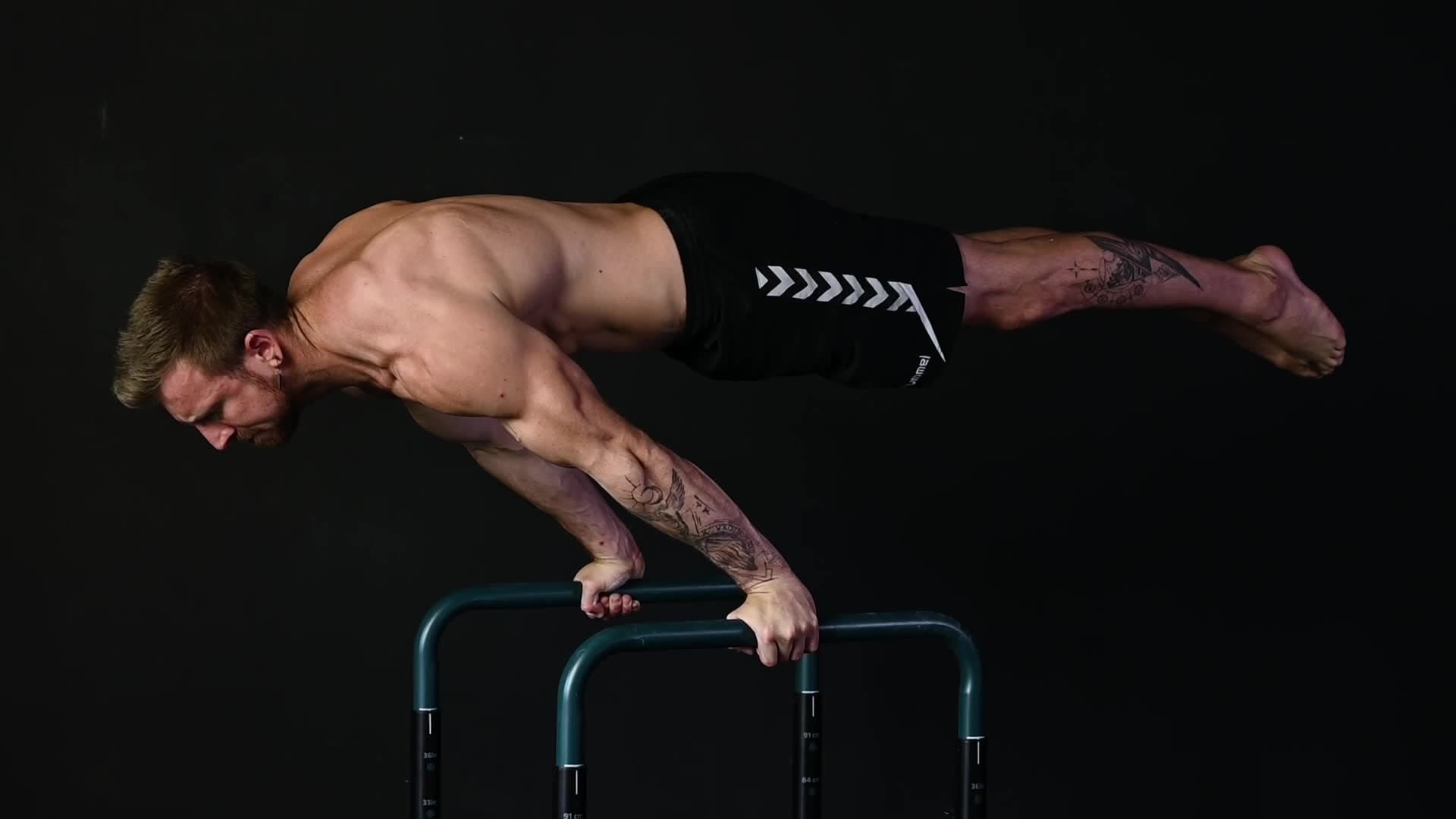
Planche Progressions
Place hands shoulder-width apart, fingers turned outward ~45° for wrist comfort (or use parallettes). Lock elbows fully and turn them forward: this stabilizes the shoulders and engages the biceps
→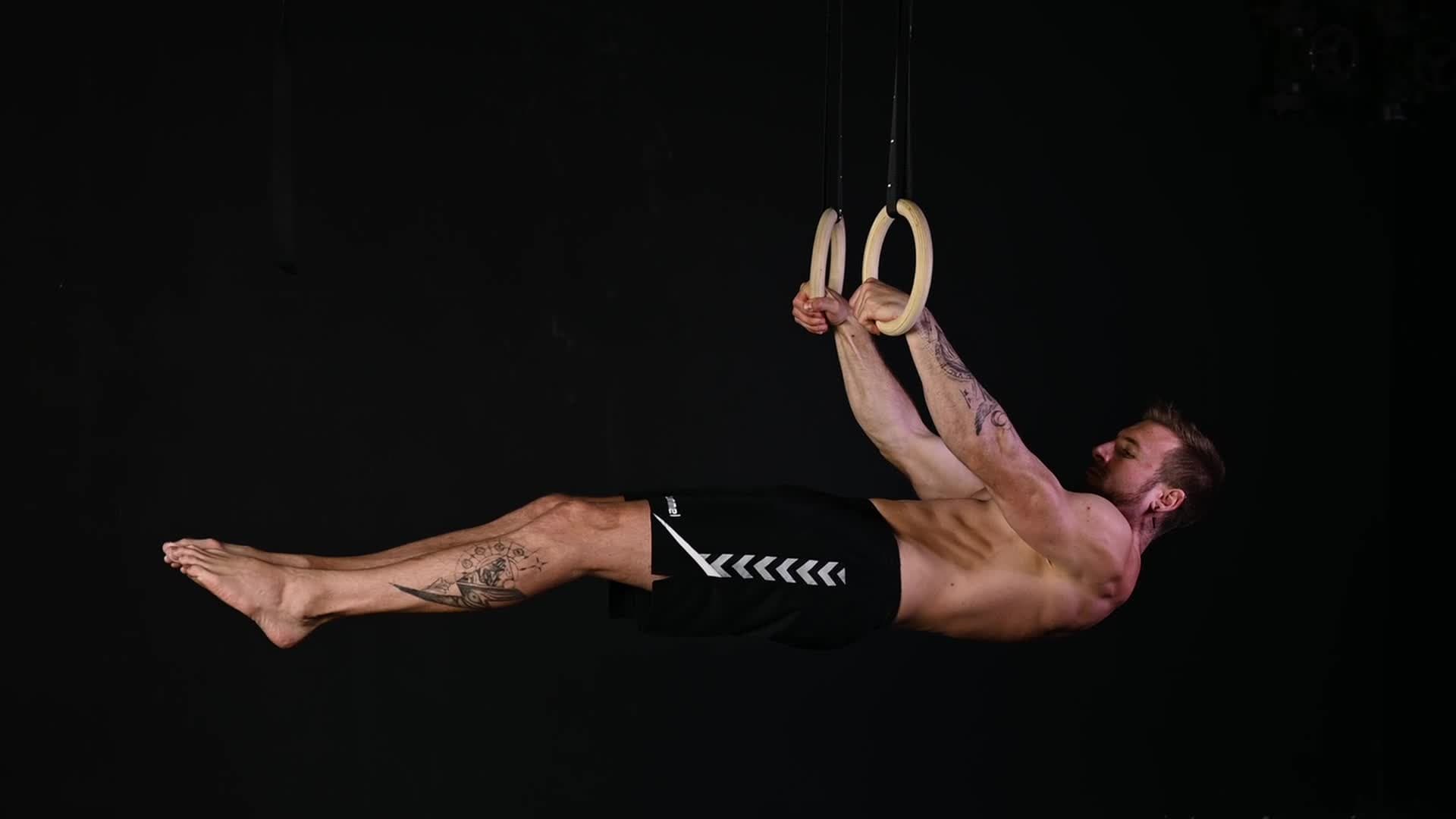
Front Lever Progressions
Actively depress your shoulder blades by pulling them down away from your ears; this is the foundation of a strong front lever position. Retract your shoulder blades by squeezing them together as if pinching a coin between them; combine depression and retraction for a stable shoulder base
→ - Periodized hypertrophy, strength, and deload blocks that build real muscle and maximal strength (not just conditioning), including pressing skills like the handstand push-up and core skills like the L-sit.
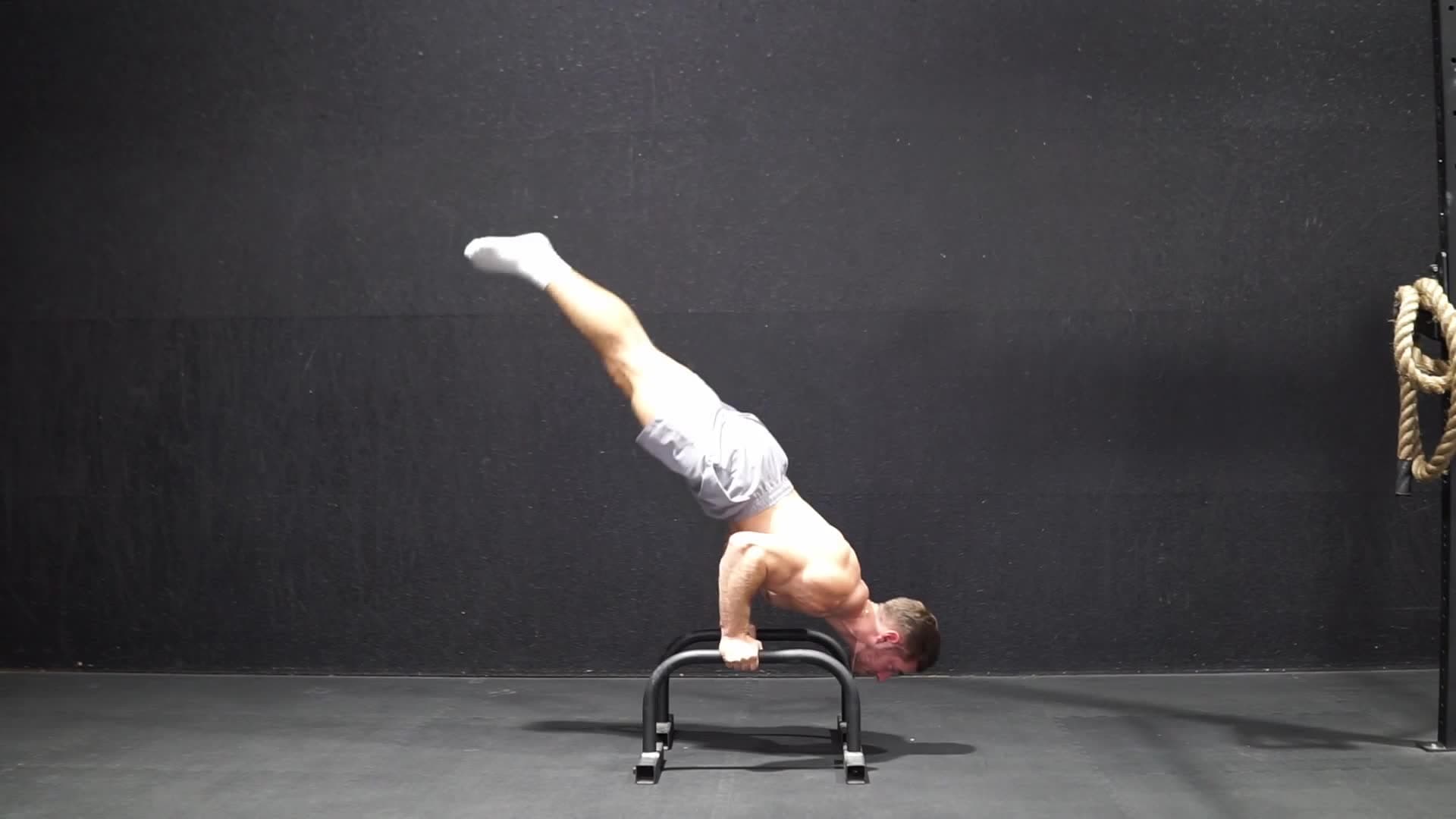
Handstand Push Up Progressions
Keep the core tight and glutes + abs engaged. Lean the shoulders forward as you descend, keeping hips stacked over wrists
→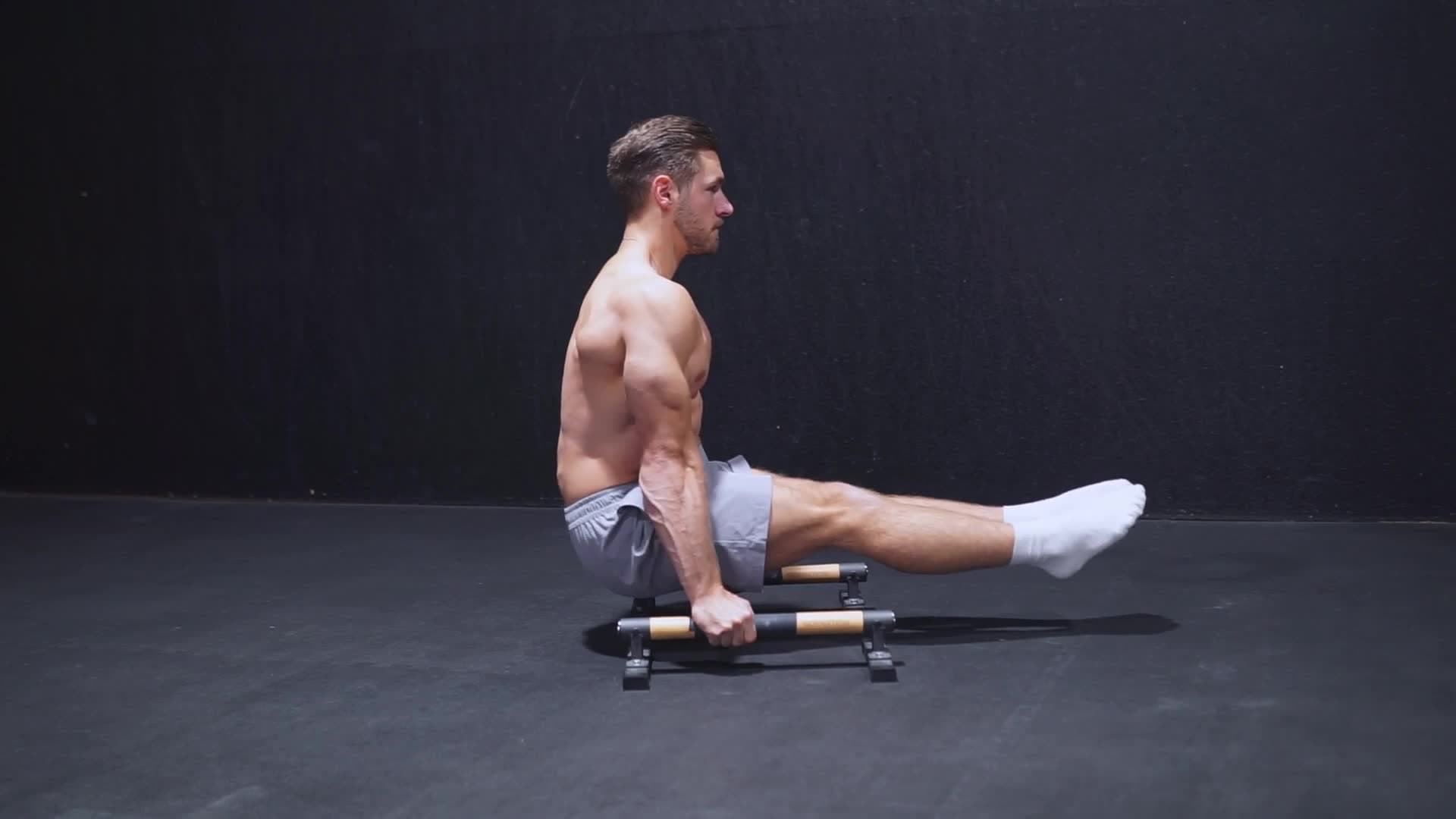
L-Sit Progressions
Place your hands on the floor or parallettes beside your hips: fingers pointing forward, arms completely straight with elbows locked out. Actively depress your shoulder blades by pushing your shoulders down toward the ground: this creates the clearance needed to lift your legs
→ - A dedicated, individual mobility program trained as its own goal (spinal control, splits, and deep positions), not warm-up filler.
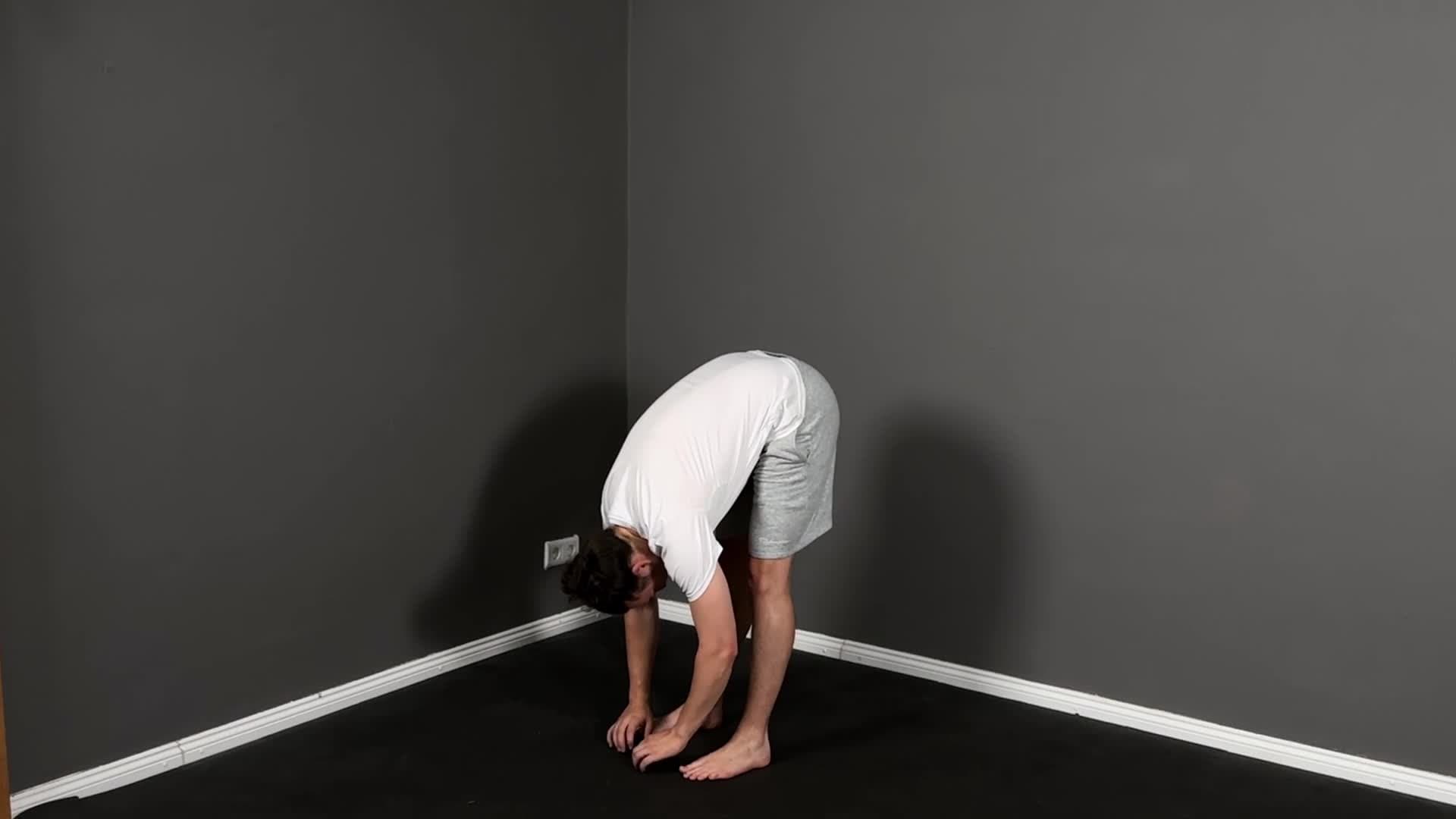
Jefferson Curl Progressions
Stand on an elevated surface (box or step) with your feet together. Hold a light weight with both hands in front of your body
→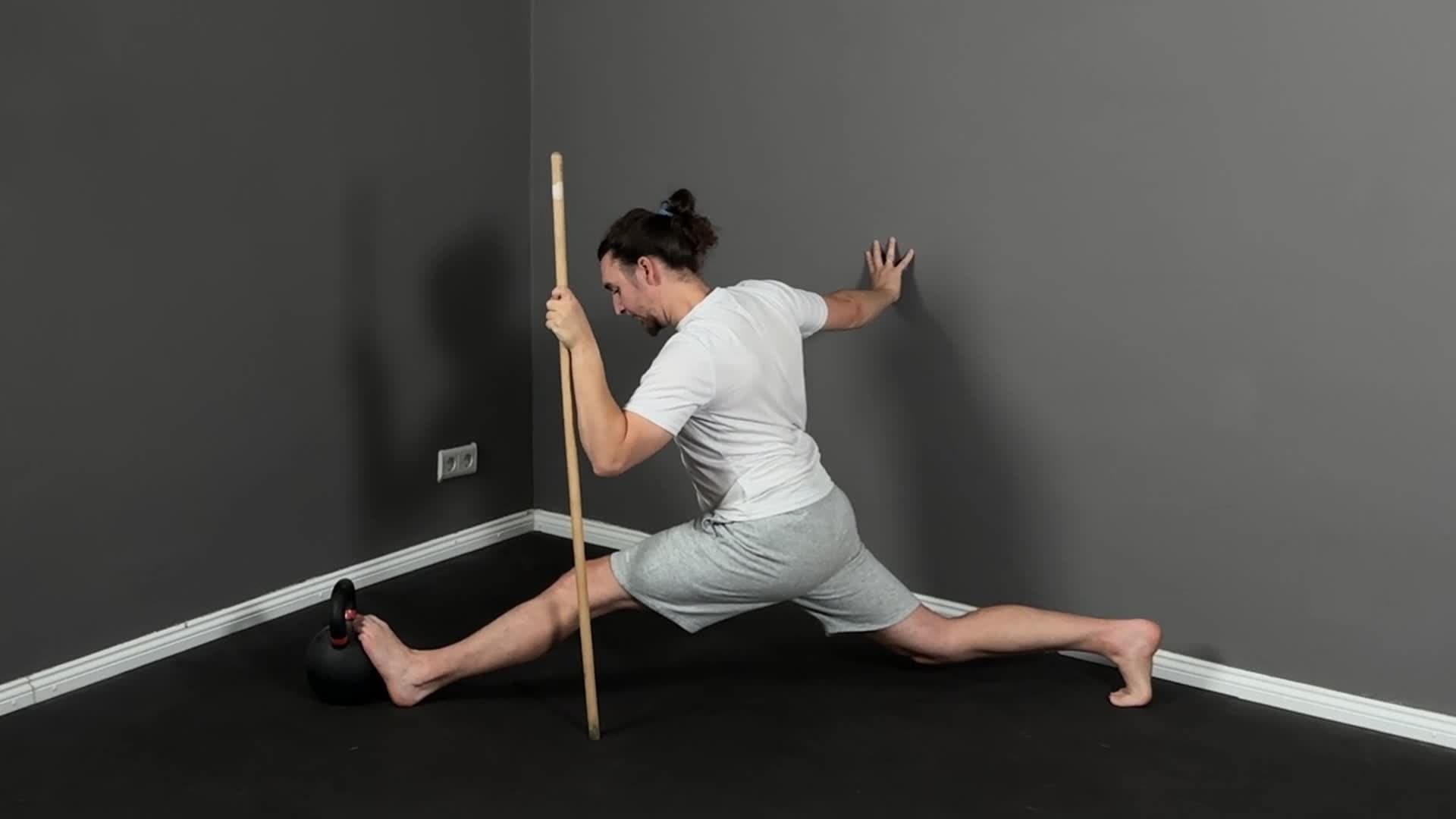
Front Split Progressions
Start with a low lunge and slowly slide your front leg forward. Keep your hips squared and facing forward
→ - Equipment-adaptive programming, a 1,000+ exercise library, a Progressive Overload Assistant, visual rep tracking, and Apple Watch support round out the system.
Every exercise comes with video, and you can browse the full exercise library to see the depth. And it includes dedicated mobility work that Freeletics simply doesn't program as a goal.
Freeletics vs Simple Calisthenics: side-by-side
Simple Calisthenics wins on philosophy, scope, and price for anyone whose goal is skills and strength. Here's the direct comparison so you can decide fast:
| Attribute | Freeletics | Simple Calisthenics |
|---|---|---|
| Training philosophy | Adaptive HIIT / conditioning | Skill-tree progression |
| Skills (handstand, muscle-up, planche) | Not programmed | Full progression trees |
| Strength / hypertrophy | Limited, conditioning-biased | Periodized strength + hypertrophy |
| Mobility | Warm-up filler | Dedicated individual program |
| Equipment adaptivity | Mostly no-equipment | None → bar → rings → full gym |
| Personalization | Adapts intensity from ratings | Goals, equipment, level, schedule |
| Price | $34.99/mo · $99.99/yr | $9.99/mo · $69.99/yr · $179.99 lifetime + 7-day trial |
The price gap is the clincher: Simple Calisthenics costs roughly a third of Freeletics' Coach plan while doing far more for a skill-focused trainee.
Who should switch, and who should stay
Be honest with yourself about your goal, because that's what decides this. Not everyone should switch, and Freeletics is the right call for a specific kind of trainee.
Stay on Freeletics if your goal is pure conditioning, sweat, and fat loss, you love the HIIT format, and you have no interest in learning skills. It does that job well and the short, no-equipment sessions are genuinely convenient.
Switch to Simple Calisthenics if you want to learn skills like the handstand and muscle-up, build real strength and visible muscle, train mobility as its own goal, and follow one long-term adaptive program that grows with you: all for a fraction of the price.
Ready to stop sweating through HIIT circuits and actually learn calisthenics? Start your free 7-day trial of Simple Calisthenics and get an individualized skill-and-strength program built around your goals.
Start free trialFrequently asked questions
What is the best alternative to Freeletics?
For true calisthenics, the best alternative is Simple Calisthenics. Freeletics focuses on HIIT and conditioning, while Simple Calisthenics gives you an individualized, long-term skill-tree program that builds real strength and teaches skills like the handstand and muscle-up: at roughly a third of the price.
Is Freeletics real calisthenics?
Not really. Freeletics uses bodyweight movements but programs them as HIIT and functional conditioning: high-rep, time-based circuits. True calisthenics centers on skill progressions and maximal relative strength, which require deliberate, low-rep practice toward specific positions rather than conditioning circuits.
How much does Freeletics cost compared to alternatives?
Freeletics Coach costs $34.99 per month or $99.99 per year, with a limited free tier. Simple Calisthenics is significantly cheaper at $9.99 per month, $69.99 per year, or $179.99 for lifetime access, and includes a 7-day free trial.
Can you learn skills like the handstand or muscle-up on Freeletics?
Freeletics isn't optimized for advanced skills: it has no dedicated prerequisite-mapped progressions toward the handstand, muscle-up, or planche. A skill-tree app like Simple Calisthenics starts you at your current level and automatically swaps in harder progressions as you improve.
Is there a cheaper Freeletics alternative that's also better for calisthenics?
Yes. Simple Calisthenics costs about a third of Freeletics' Coach subscription and is purpose-built for calisthenics (skills, strength, hypertrophy, and mobility) rather than HIIT conditioning. It also adapts to your equipment, level, and schedule.
FAQ
- What is the best alternative to Freeletics?
- For true calisthenics, the best alternative is Simple Calisthenics. Freeletics focuses on HIIT and conditioning, while Simple Calisthenics gives you an individualized, long-term skill-tree program that builds real strength and teaches skills like the handstand and muscle-up: at roughly a third of the price.
- Is Freeletics real calisthenics?
- Not really. Freeletics uses bodyweight movements but programs them as HIIT and functional conditioning: high-rep, time-based circuits. True calisthenics centers on skill progressions and maximal relative strength, which require deliberate, low-rep practice toward specific positions rather than conditioning circuits.
- How much does Freeletics cost compared to alternatives?
- Freeletics Coach costs $34.99 per month or $99.99 per year, with a limited free tier. Simple Calisthenics is significantly cheaper at $9.99 per month, $69.99 per year, or $179.99 for lifetime access, and includes a 7-day free trial.
- Can you learn skills like the handstand or muscle-up on Freeletics?
- Freeletics isn't optimized for advanced skills: it has no dedicated prerequisite-mapped progressions toward the handstand, muscle-up, or planche. A skill-tree app like Simple Calisthenics starts you at your current level and automatically swaps in harder progressions as you improve.
- Is there a cheaper Freeletics alternative that's also better for calisthenics?
- Yes. Simple Calisthenics costs about a third of Freeletics' Coach subscription and is purpose-built for calisthenics (skills, strength, hypertrophy, and mobility) rather than HIIT conditioning. It also adapts to your equipment, level, and schedule.