Front Lever Progressions
Muscles worked
- Lat
- Trapezius
- Rear Shoulder
- Tricep
- Forearm Flexors
Equipment
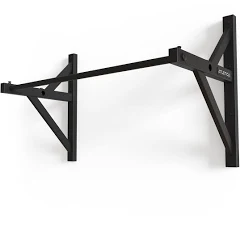
Form Cues
-
Actively depress your shoulder blades by pulling them down away from your ears; this is the foundation of a strong front lever position
-
Retract your shoulder blades by squeezing them together as if pinching a coin between them; combine depression and retraction for a stable shoulder base
-
Keep your arms fully locked out with zero bend in the elbows throughout the entire hold; any elbow bend shifts the exercise away from the target muscles
-
Maintain a posterior pelvic tilt by squeezing your glutes and bracing your abs; this prevents the lower back from arching and keeps you in a hollow body position
-
Generate full body tension from your fingertips to your toes; think of your body as one rigid plank that cannot bend or sag
-
Keep your hips at the same height as your shoulders; if your hips drop below horizontal, regress to an easier progression
-
Adopt a hollow body position with your core engaged; your abs should be actively working to maintain the straight body line
-
Actively pull the bar toward your hips as if performing a straight-arm pulldown; this cue maximizes lat engagement and helps maintain the horizontal position
-
Point your toes and keep your legs tight together (unless performing straddle variations) to maintain clean body lines and full tension
-
Breathe in short controlled breaths; avoid holding your breath which causes early fatigue and loss of body tension
-
The front lever is limited by lat and scapular strength, not core strength: if you can hold a hollow body for 10 seconds with support under your lower back and hips, your core is not the bottleneck
-
Start training it once you can hold the tuck front lever, which usually lines up with around 7 pull-ups
-
With a resistance band, attach it at the hip so it pulls straight up, and keep it light enough that it puts you only 1 to 3 progressions above your unassisted level
-
Pick one way in and stick to it so your holds stay comparable: raising in is hardest, then lowering from an inverted hang, then extending from tuck, then dropping in from a low bar
-
Supplement the static holds with bent-arm pulling such as front lever pulls, raises and pull-ups: it speeds up progress and prevents imbalances
Progressions
01 Tuck Candle Hang
-
Grip the bar at shoulder width and hang with fully locked-out arms before initiating the movement
-
Pull your knees tightly to your chest, then rotate your hips upward until your body is fully inverted and vertical
-
Actively depress your shoulder blades by pulling them down away from your ears throughout the entire hold
-
Keep your hips stacked directly above your shoulders so your torso forms a straight vertical line
-
Point your toes toward the ceiling and keep your knees pulled in tight to reduce the lever length
-
Engage your core by maintaining a slight posterior pelvic tilt, preventing your lower back from arching
-
Focus on pulling the bar toward your hips rather than just hanging passively to build lat engagement
-
Breathe steadily and avoid holding your breath; use short controlled breaths to maintain tension
-
02 Tuck Front Lever
-
Grip the bar at shoulder width and begin from a dead hang with fully locked-out elbows
-
Pull your knees tightly into your chest so your thighs press against your torso, making the tuck as compact as possible
-
Using your lats and core, rotate your body backward until your back is parallel to the ground and horizontal
-
Actively depress and retract your shoulder blades, pulling them down and together to create a stable shoulder position
-
Keep your arms completely straight throughout; any elbow bend shifts the load away from the target muscles
-
Maintain a posterior pelvic tilt by squeezing your glutes and engaging your abs to prevent your lower back from arching
-
Think about pulling the bar toward your hips to maximize lat engagement rather than just hanging
-
Breathe in short controlled breaths; avoid holding your breath which causes early fatigue and loss of tension
-
03 Half Tuck Front Lever
-
Grip the bar at shoulder width and hang with fully locked-out arms in a dead hang position
-
Rotate your body backward and open your hips until your knees are approximately at elbow level, creating a wider angle than the basic tuck
-
Keep your back parallel to the ground; your torso from shoulders to hips should form a straight horizontal line
-
Actively depress and retract your shoulder blades, pulling them firmly down and together throughout the hold
-
Maintain completely straight arms with no bend in the elbows; focus on pulling the bar toward your waist using your lats
-
Engage a posterior pelvic tilt by squeezing glutes and tightening abs to prevent the lower back from arching
-
Keep your shins roughly vertical, hanging straight down from your knees, to maintain consistent lever length
-
Breathe in short controlled breaths and maintain full body tension; do not let the hips sag below the shoulder line
-
04 Adv. Tuck Front Lever
-
Grip the bar at shoulder width and start from a dead hang with arms fully locked out
-
Rotate your body into the advanced tuck position where your hips are open to roughly 90 degrees or less, with knees bent but thighs extending well away from your chest
-
Your back must be completely horizontal and parallel to the ground; if your hips drop, the progression is too advanced
-
Depress and retract your shoulder blades firmly, pulling them down and together to engage your lats and create a solid base
-
Keep your arms completely straight and think about pulling the bar toward your waist to maximize lat activation
-
Maintain a posterior pelvic tilt by engaging your abs and squeezing your glutes; avoid any lower back arch
-
The further you extend your knees from your chest, the harder this becomes; find the angle where you can maintain perfect form for your target hold time
-
Breathe in short controlled breaths while keeping full body tension; do not allow the hips to sag or the body to rotate
-
05 One Leg Front Lever
-
Grip the bar at shoulder width and start from a dead hang with fully locked-out arms
-
Extend one leg fully straight and in line with your torso while keeping the other leg tucked tightly to your chest
-
Your extended leg, hips, and torso should form one straight horizontal line parallel to the ground
-
Depress and retract your shoulder blades firmly throughout the hold, pulling them down and together
-
Keep both arms completely straight; do not bend the elbows to compensate for the asymmetric load
-
Actively resist body rotation by engaging your obliques; the asymmetric weight distribution will try to twist your body
-
Maintain a posterior pelvic tilt with engaged abs and glutes to keep a hollow body position and prevent lower back arching
-
Alternate which leg is extended between sets to develop balanced strength on both sides
-
06 One Leg Advanced Front Lever
-
Grip the bar at shoulder width and start from a dead hang with fully locked-out arms
-
Extend one leg completely straight in line with your torso while keeping the other leg only slightly bent at the knee, almost fully extended
-
The slight bend in the secondary leg is the only difference from a full front lever; keep both legs as close to straight as possible
-
Your entire body from shoulders through hips to the extended foot should form one straight horizontal line parallel to the ground
-
Depress and retract your shoulder blades firmly, pulling them down and together to create maximum lat engagement
-
Keep both arms completely locked out; actively pull the bar toward your waist to maintain the horizontal position
-
Engage your obliques strongly to resist the body rotation caused by the asymmetric leg position
-
Maintain a posterior pelvic tilt with glutes and abs engaged; alternate the bent leg between sets for balanced development
-
07 Almost Full Front Lever
-
Grip the bar at shoulder width and start from a dead hang with fully locked-out arms
-
Bring both legs together and raise your body to a horizontal position; keep the legs only slightly bent at the knees as a small concession
-
The goal is to be as close to a full front lever as possible; minimize the knee bend and work toward straightening the legs over time
-
Your body from shoulders through hips should be perfectly horizontal and parallel to the ground
-
Depress and retract your shoulder blades firmly, pulling them down and together for maximum lat and upper back engagement
-
Keep arms completely locked out and actively pull the bar toward your waist using your lats to maintain the horizontal position
-
Maintain a strong posterior pelvic tilt by squeezing your glutes and engaging your abs; keep a hollow body position throughout
-
Breathe in short controlled breaths while maintaining full body tension; point your toes and squeeze your legs together tightly
-
08 Straddle Front Lever
-
Grip the bar at shoulder width and start from a dead hang with fully locked-out arms
-
Spread your legs into a wide straddle position and raise your body to horizontal; the wider the straddle, the shorter the lever and the easier the hold
-
Keep both legs completely straight with toes pointed; any knee bend significantly reduces the effectiveness of this progression
-
Your hips and torso should form a perfectly horizontal line parallel to the ground; do not let the hips drop below shoulder level
-
Depress and retract your shoulder blades firmly, pulling them down and together for maximum lat engagement
-
Keep arms completely locked out and actively pull the bar toward your waist; think of it as a straight-arm pulldown
-
Maintain a posterior pelvic tilt by squeezing your glutes and engaging your abs to hold a hollow body position
-
As you get stronger, gradually narrow your straddle to increase the lever length and progress toward the full front lever
-
09 Front Lever
-
Grip the bar at shoulder width and start from a dead hang with fully locked-out arms
-
Raise your entire body to a perfectly horizontal position with legs completely straight, together, and toes pointed
-
Your body should form one rigid straight line from your shoulders through your hips to your toes, perfectly parallel to the ground
-
Depress and retract your shoulder blades as firmly as possible, pulling them down and together; this is the primary driver of the hold
-
Keep arms completely locked out with zero bend in the elbows; actively pull the bar toward your waist as if doing a straight-arm pulldown
-
Maintain a strong posterior pelvic tilt by squeezing your glutes hard and bracing your abs; adopt a hollow body position to prevent any lower back arch
-
Squeeze your legs together tightly with pointed toes; any separation or sagging of the legs increases the difficulty and indicates loss of tension
-
Breathe in short controlled breaths while maintaining maximum full-body tension from fingertips to toes throughout the entire hold
-
Common mistakes
Built into a program made for you
Every exercise here adapts to your goals, equipment and schedule inside the app.