Calisthenics Beginner Workout Plan: Build Real Strength in 4-8 Weeks
A complete beginner calisthenics workout plan with weekly schedule, exercises, sets, reps, and progression rules, so you keep making gains past week 2.
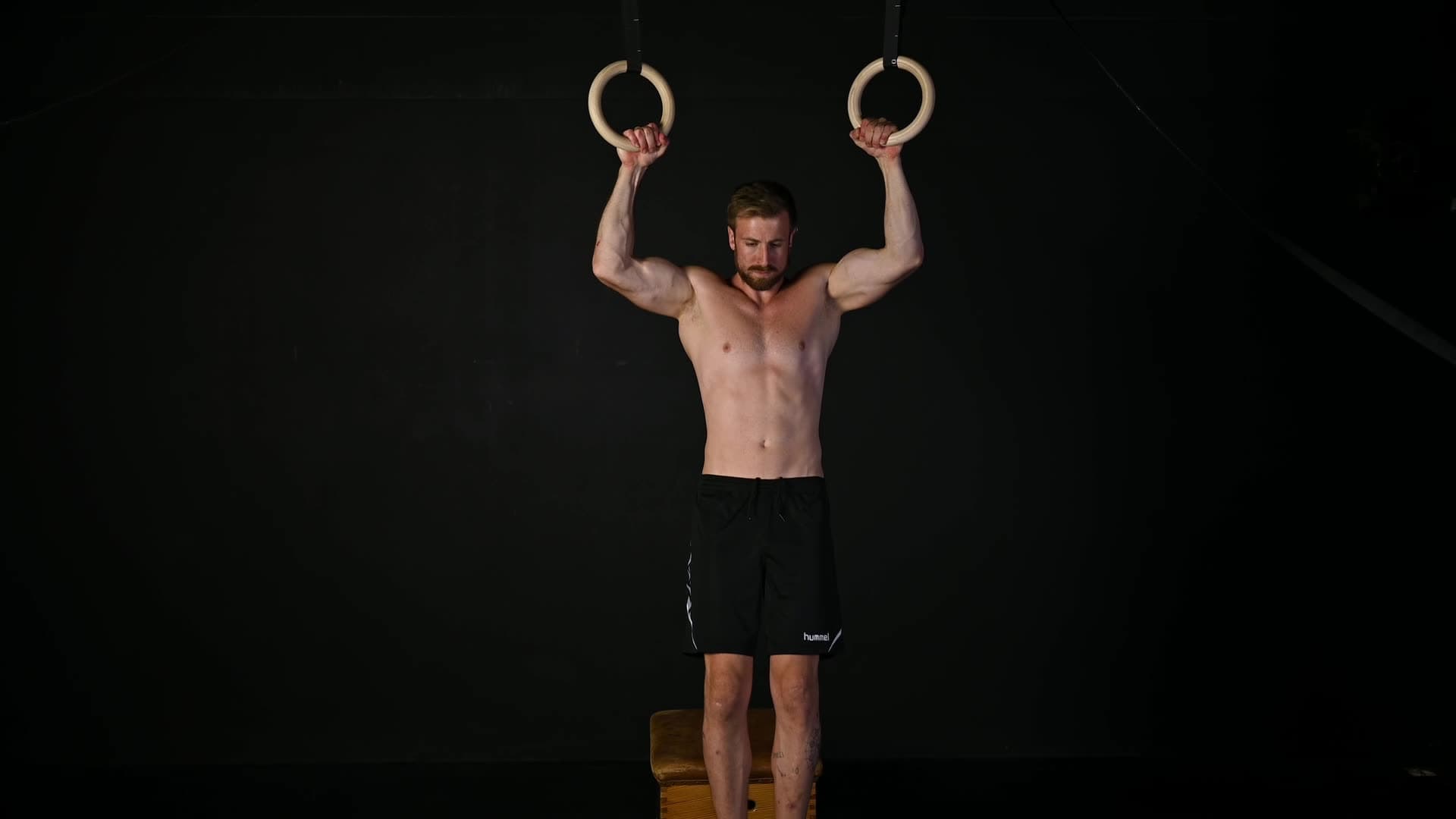
Most beginner calisthenics plans tell you what to do in week one, and nothing more. This one also tells you why, and how to keep progressing past week four.
The difference between a beginner program that works and one that doesn't is progression logic. Exercises need to get harder over time. If they don't, you adapt to the stimulus and stop improving. This plan is built around that principle from day one.
Why Full Body Training Beats Splits for Beginners
Full body training 3 times per week is the right structure for beginners, and the reason is motor learning, not just volume.
Strength gains in the early weeks of training come primarily from neural adaptation: your nervous system gets better at recruiting muscle fibers, coordinating movement, and applying force efficiently. This adaptation requires frequent repetition of the movement pattern: practicing the push-up three times a week produces faster neural adaptation than practicing it once a week, even with the same total weekly volume.
Push/pull/legs splits train each pattern once per week. That's too infrequent for the motor learning your body needs early on. Once you have a solid strength base (typically after 3-4 months of consistent training), splits become appropriate. Before that, full body wins.
The push/pull balance principle: For every pushing rep, match it with a pulling rep. This isn't aesthetic: it prevents the anterior shoulder dominance that causes chronic shoulder problems in athletes who only train push-ups and dips. Every program below respects this ratio.
The Beginner Exercise Toolkit
Six movements form the foundation of this plan. Each one covers a major movement pattern; together they work every significant muscle group.
Push-ups: pressing pattern, trains chest, triceps, and front shoulder. Start with the incline variation if floor push-ups aren't achievable yet.
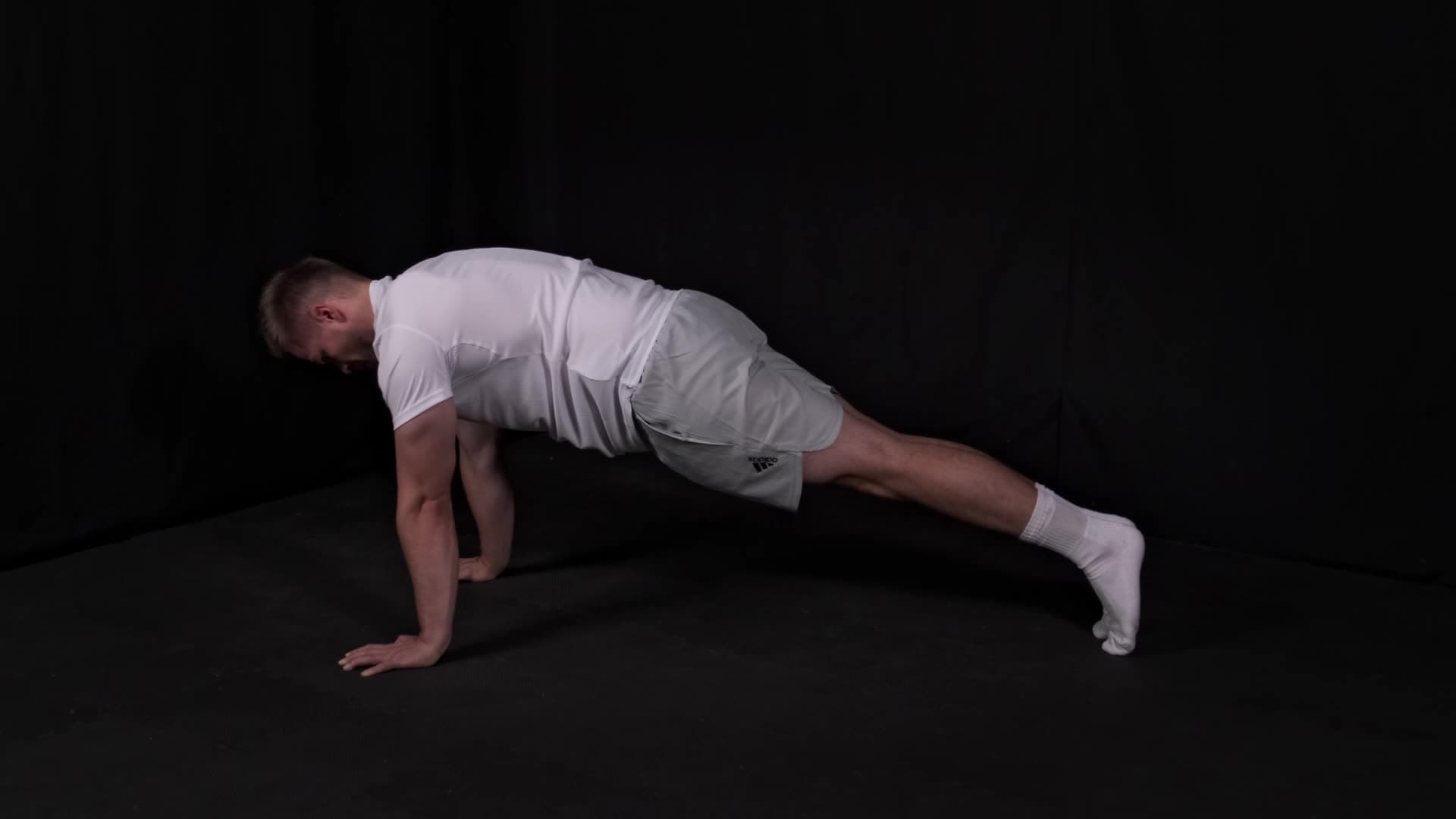
Push Up Progressions
Maintain a straight body line. Avoid the hips sinking down, or raising up too high
Rows: horizontal pulling, trains lats, biceps, and rear delts. Use a desk, low bar, or rings. This is your primary pulling movement before pull-ups are within reach.
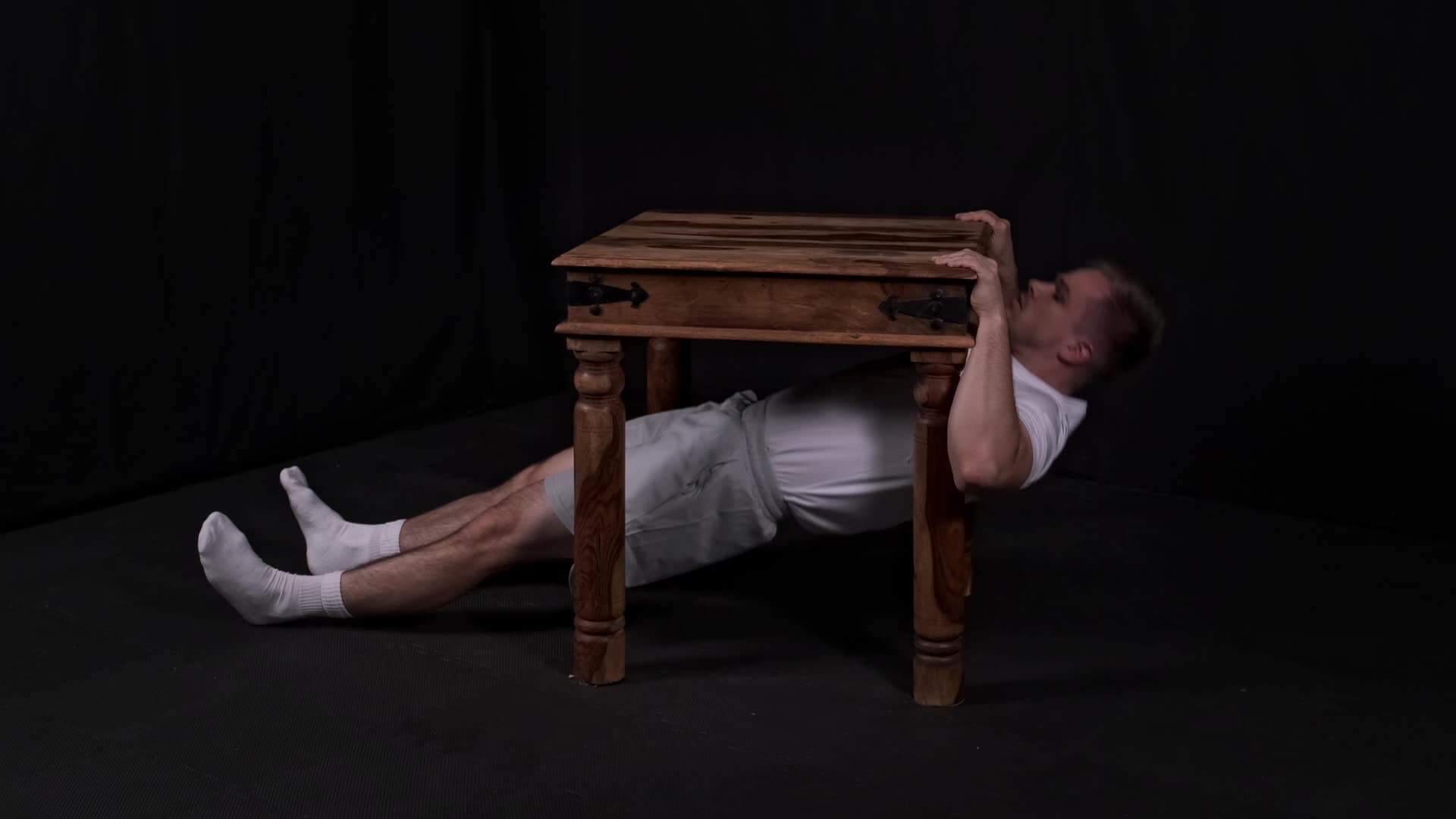
Desk Row Progressions

These progressions use household furniture: always ensure the surface or object is stable and secure before starting. Grip the edge firmly with hands shoulder-width apart and lean back with arms fully extended
Dips: vertical pressing, trains triceps, lower chest, and shoulder. Begin with chair or bench dips; progress to parallel bar dips as strength allows.
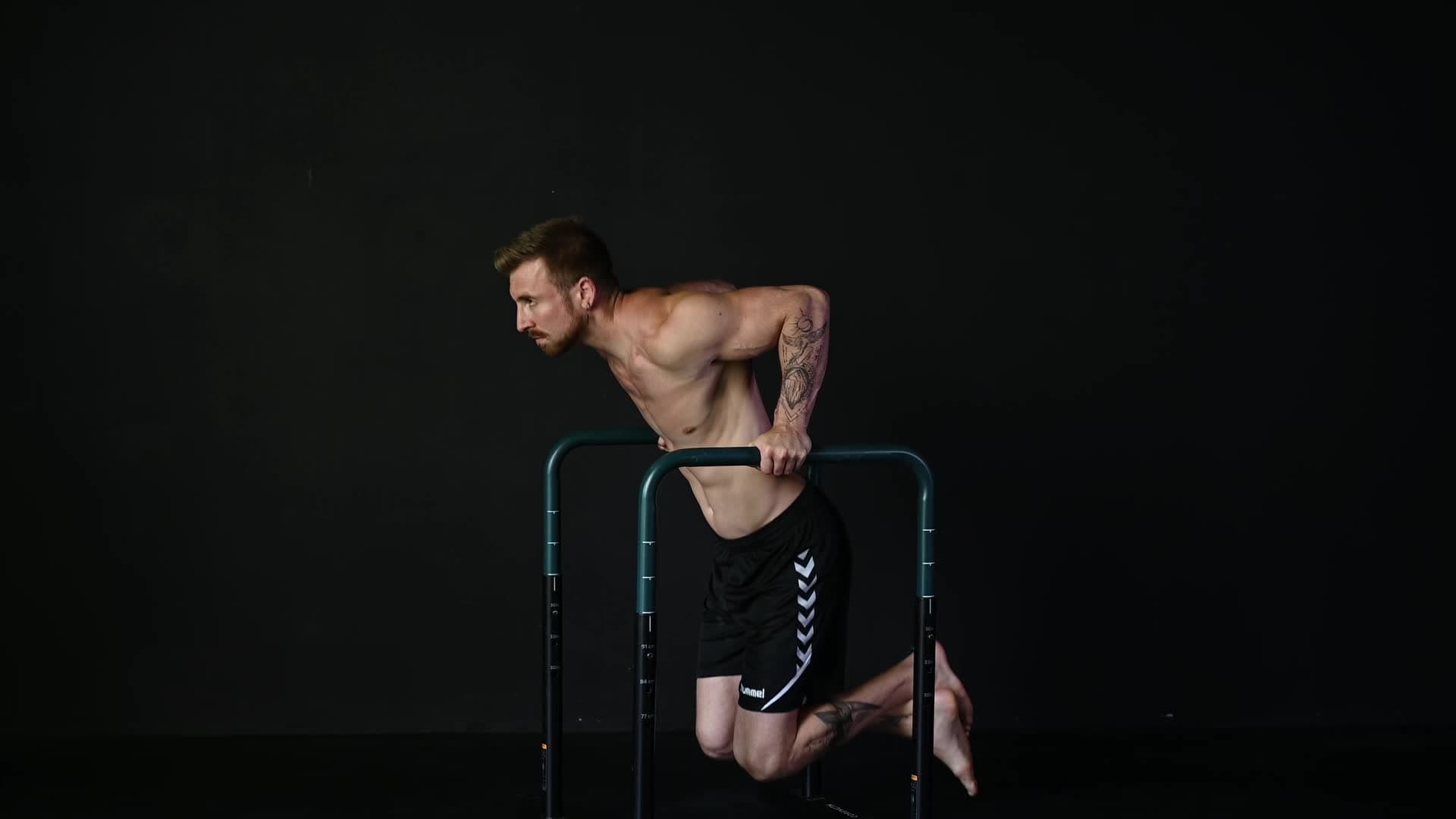
Dip Progressions
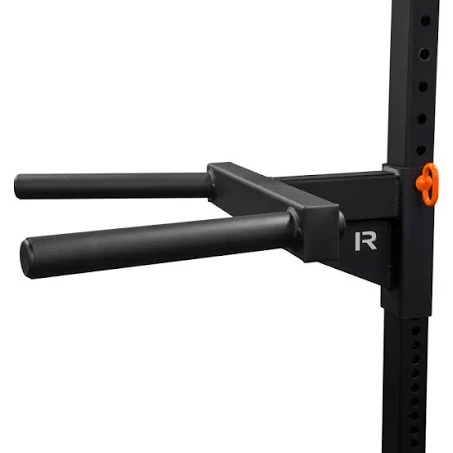
Move slowly with control. Get to 90° elbow angle or deeper, as long as you stay pain free
Chin-ups: vertical pulling, trains lats, biceps, and upper back. Start with negatives (jump up, lower slowly over 5 seconds) if full chin-ups aren't possible yet.
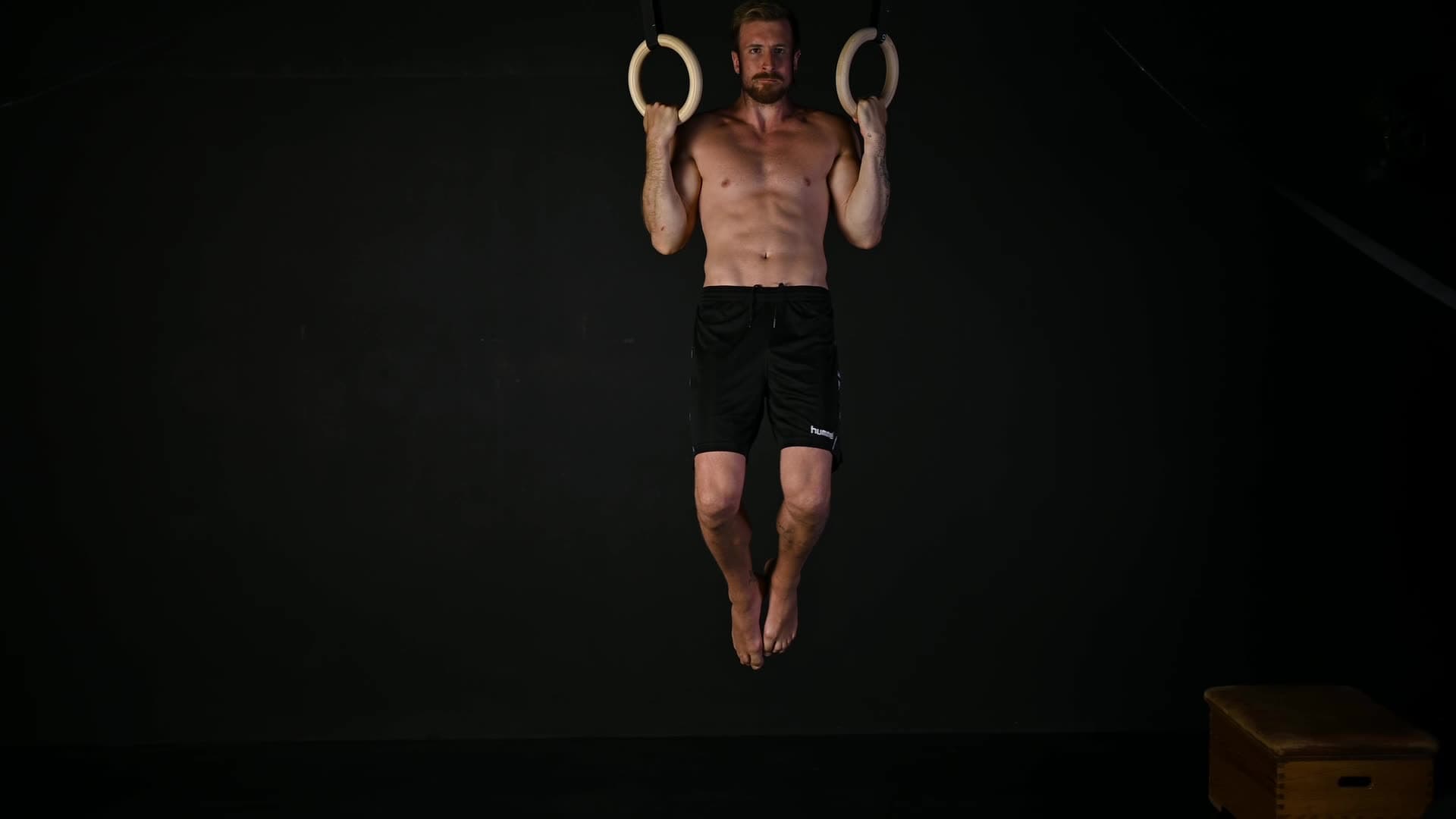
Chin Up Progressions
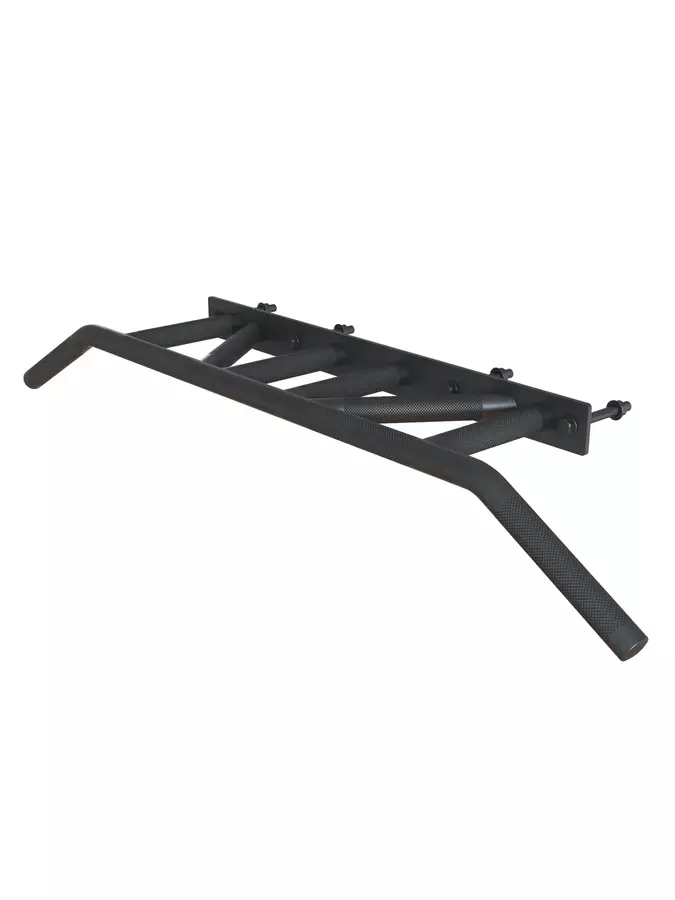
Use a shoulder-width underhand grip (palms facing you) on a bar. Engage your core and keep your body in a straight line
Hollow body hold: core anti-extension. Lying on your back, arms and legs extended, pressed into the floor. Start with knees bent if the full version is too difficult.
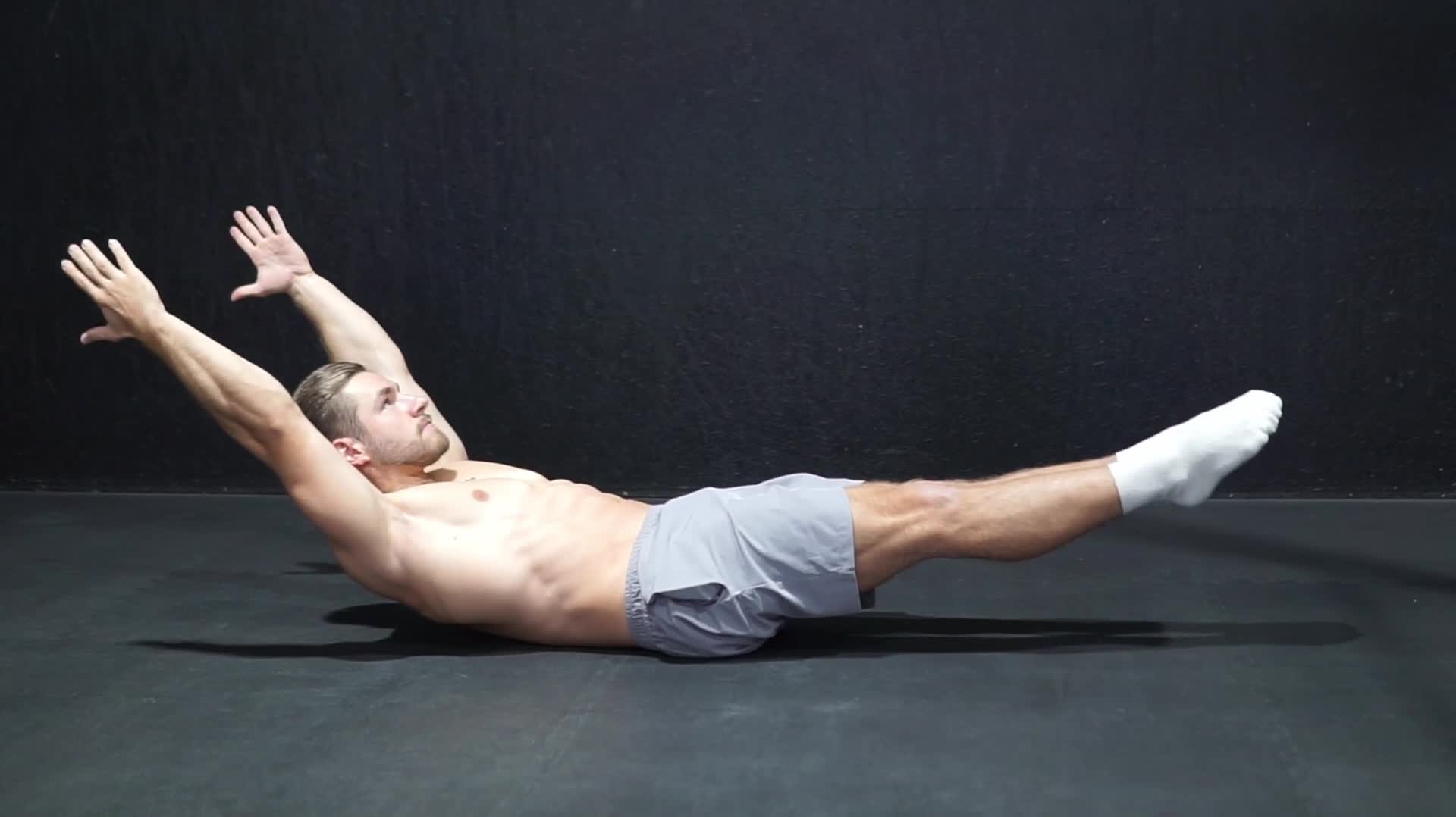
Hollow Body Progressions
Lie on your back with arms extended overhead and legs straight. Press your lower back firmly into the ground: there should be no gap between your back and the floor
Elbow plank: core anti-extension, also trains shoulder stability. Hold a rigid position from elbows to toes. Start with shorter holds and build duration progressively.
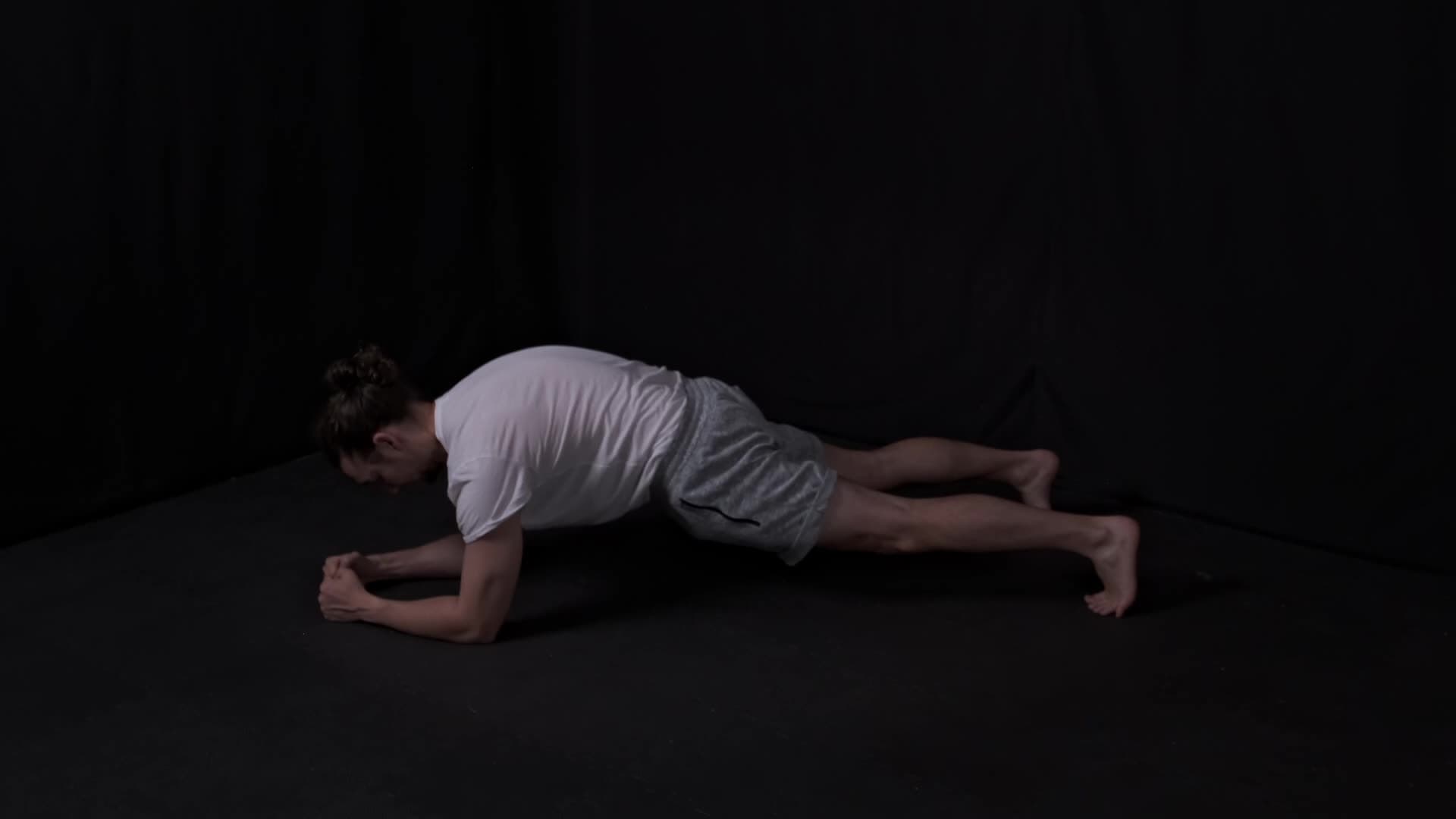
Elbow Plank Progressions
Place elbows directly under or slightly in front of the shoulders. Protract your shoulder blades (push the ground away) and depress your shoulders away from your ears
The 3-Day-Per-Week Beginner Plan (Weeks 1-4)
This plan uses two alternating sessions (Day A and Day B) that you rotate across your three weekly training days. Week 1 runs A/B/A; week 2 runs B/A/B; week 3 returns to A/B/A, and so on.
Day A
| Exercise | Sets | Reps / Duration | Rest |
|---|---|---|---|
| Push-up progression | 3 | Leave 2 reps in reserve | 90 sec |
| Row progression | 3 | Leave 2 reps in reserve | 90 sec |
| Hollow body hold | 3 | 20-40 sec | 60 sec |
| Squat progression | 3 | Leave 2 reps in reserve | 90 sec |
Day B
| Exercise | Sets | Reps / Duration | Rest |
|---|---|---|---|
| Dip progression | 3 | Leave 2 reps in reserve | 90 sec |
| Chin-up progression | 3 | Leave 2 reps in reserve | 90 sec |
| Elbow plank | 3 | 20-40 sec | 60 sec |
| Squat progression | 3 | Leave 2 reps in reserve | 90 sec |
Sample Week 1: Monday (A) / Wednesday (B) / Friday (A) Sample Week 2: Monday (B) / Wednesday (A) / Friday (B)
Each session should take 30-40 minutes including a 5-minute warmup (joint circles, arm swings, shoulder rotations, 10 easy reps of the day's hardest movement) and a brief cool-down stretch.
How to Warm Up for Calisthenics (5 Minutes, Done Right)
A calisthenics warm-up is different from a pre-gym cardio session. Its job is to prime the neuromuscular patterns you're about to train, not just raise your heart rate.
Here's a 5-step warm-up protocol that takes under 5 minutes:
- Arm circles: 10 forward, 10 backward. Loosens shoulder joint through full range.
- Wrist circles and wrist leans: 10 circles each direction, then 30 seconds of forward leans on knuckles. Essential before push-up work.
- Shoulder rotations: 10 reps, full range. Primes the rotator cuff.
- Hip circles and deep squat: 10 hip circles per side, then hold a deep squat for 30 seconds.
- Ramp set: 10 easy reps of your hardest movement at 50% effort. For example, 10 wall push-ups before incline push-ups, or 5 easy rows before working rows.
This sequence activates the joints you'll load heavily and reduces injury risk during the working sets.
How to Progress: The Rule Every Beginner Needs
Progression in calisthenics means moving to a harder exercise variation, not just adding more reps indefinitely to the same movement.
Apply the two-reps-in-reserve (2RIR) rule: when you can complete all three sets of an exercise and feel like you could have done 2 more reps on the last set, it's time to advance to the next variation. When you cannot, keep building at the current level.
When you're ready to progress, move in this order:
- Increase reps within the same variation (e.g., 3×8 → 3×12).
- Reduce rest time (e.g., 90 sec → 75 sec between sets).
- Move to the next variation in the progression ladder: this is the most important driver of long-term results.

Pull Up Progressions
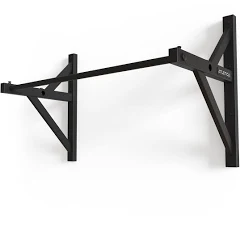
Start from a dead hang with arms fully extended: use a shoulder-width overhand (pronated) grip. Initiate by depressing and retracting the shoulder blades (scapular pull) before bending the arms
The pull-up progression is the clearest example: rows → chin-up negatives → chin-ups → pull-ups → weighted pull-ups → unilateral pull-ups. Each step is harder than the last; each step produces new adaptation. The progression never ends.
What Weeks 5-8 Look Like
After 4 weeks of consistent 3-day training, you should notice: at least one exercise has advanced to a harder variation, your session times have shortened as the movements become more automatic, and your baseline strength has measurably improved.
At this point:
- Advance any stalled exercises using the 2RIR rule
- Add a 4th day if recovery has been consistently good: make it a skill or mobility session, not a heavy strength day
- Start tracking your reps per set: knowing your exact numbers makes progression decisions objective rather than guesswork
Target milestones for the end of 8 weeks: 10 clean push-ups with full range of motion, 3 full chin-ups, parallel bar dips with controlled form, and a 40-second hollow body hold.
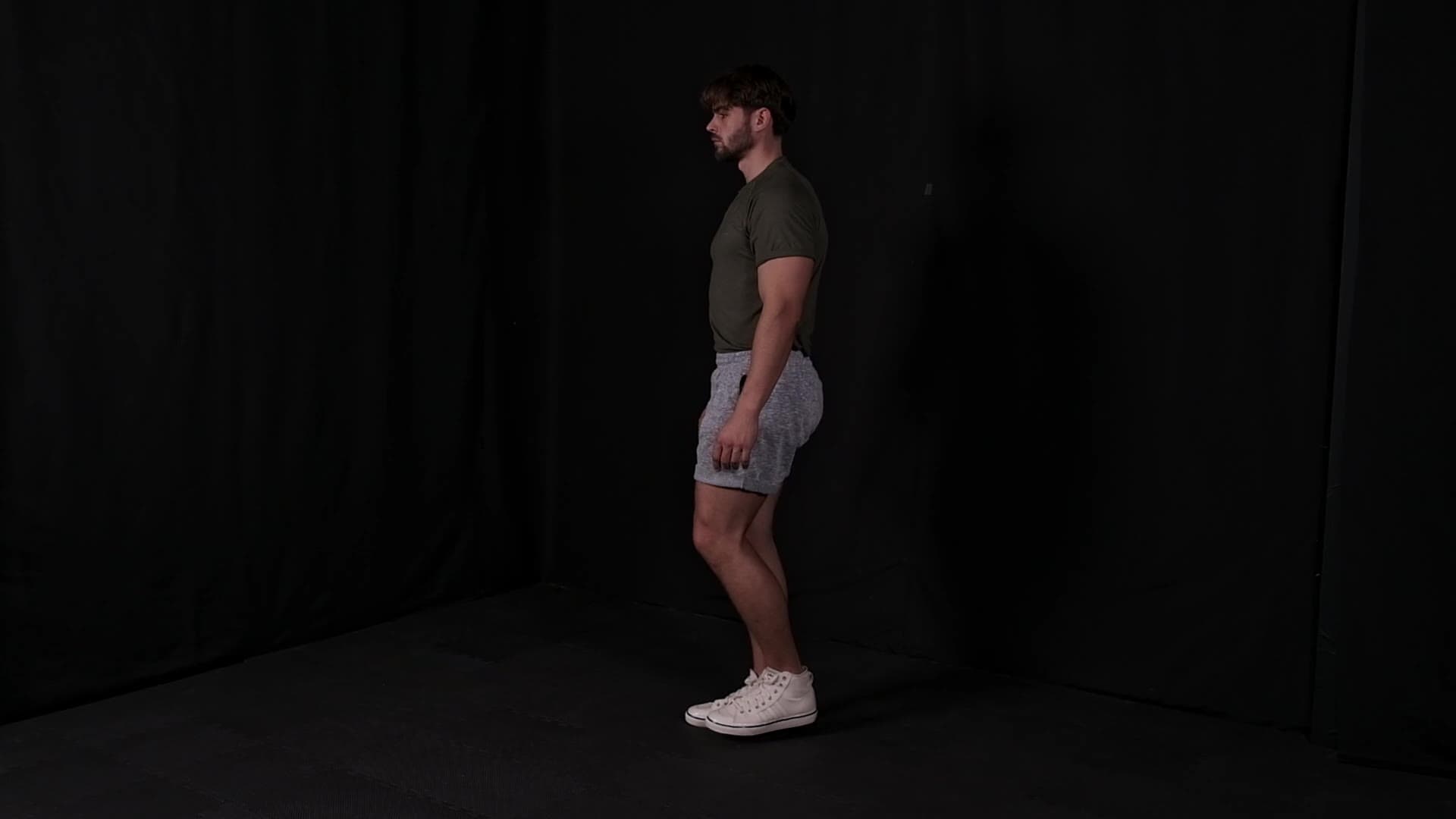
Pistol Squat Progressions
Stand on one leg with feet hip-width apart: lift the other leg and extend it straight forward in front of you. Extend your arms forward for counterbalance: this is crucial for staying upright
Pistol squat progressions become a realistic goal around the 3-4 month mark for most beginners who train squats consistently. Don't rush toward single-leg work: bilateral squat strength comes first.
Frequently asked questions
How many days per week should a beginner do calisthenics?
Three days per week on non-consecutive days is optimal for beginners. This gives each muscle group 48 hours to recover and adapt between sessions. After 6-8 weeks of consistent training, adding a fourth session focused on skill work or mobility is a natural next step.
How long should a beginner calisthenics workout be?
30-45 minutes including warm-up and cool-down. Beginners don't need long sessions: the goal is quality of stimulus, not volume. A focused 35-minute session produces better results than a sloppy 90-minute one.
Should beginners do full body or split calisthenics workouts?
Full body. Beginners adapt primarily through motor learning (improving how the nervous system activates muscles), which requires practicing each movement pattern frequently. Training each pattern 3 times per week (full body) beats training it once per week (splits) for beginners.
Can beginners build muscle with calisthenics?
Yes. Bodyweight training produces significant muscle hypertrophy when exercise difficulty is progressively increased. The key word is progressive: doing the same push-ups forever won't build muscle. Moving through progressions (incline → standard → decline → archer) will.
What if I can't do a pull-up yet?
Start with rows: horizontal pulling using a low bar, desk, or rings. Rows build the exact same muscles as pull-ups and develop the strength needed for vertical pulling. Most beginners who train rows consistently reach their first full pull-up within 6-10 weeks.
Simple Calisthenics generates your personalized beginner plan and automatically advances it as you get stronger, no spreadsheets, no guesswork. Start your free trial and train with a program that actually scales with you.
Start free trialFAQ
- How many days per week should a beginner do calisthenics?
- Three days per week on non-consecutive days is optimal for beginners. This gives each muscle group 48 hours to recover and adapt between sessions. After 6-8 weeks of consistent training, adding a fourth session focused on skill work or mobility is a natural next step.
- How long should a beginner calisthenics workout be?
- 30-45 minutes including warm-up and cool-down. Beginners don't need long sessions: the goal is quality of stimulus, not volume. A focused 35-minute session produces better results than a sloppy 90-minute one.
- Should beginners do full body or split calisthenics workouts?
- Full body. Beginners adapt primarily through motor learning (improving how the nervous system activates muscles), which requires practicing each movement pattern frequently. Training each pattern 3 times per week (full body) beats training it once per week (splits) for beginners.
- Can beginners build muscle with calisthenics?
- Yes. Bodyweight training produces significant muscle hypertrophy when exercise difficulty is progressively increased. The key word is progressive: doing the same push-ups forever won't build muscle. Moving through progressions (incline → standard → decline → archer) will.
- What if I can't do a pull-up yet?
- Start with rows: horizontal pulling using a low bar, desk, or rings. Rows build the exact same muscles as pull-ups and develop the strength needed for vertical pulling. Most beginners who train rows consistently reach their first full pull-up within 6-10 weeks.