How to Do Handstand Push Ups: Step-by-Step Progression
A complete handstand push up progression from pike push-ups to wall reps to freestanding: with clear prerequisites, stage milestones, and the technique details most guides skip.
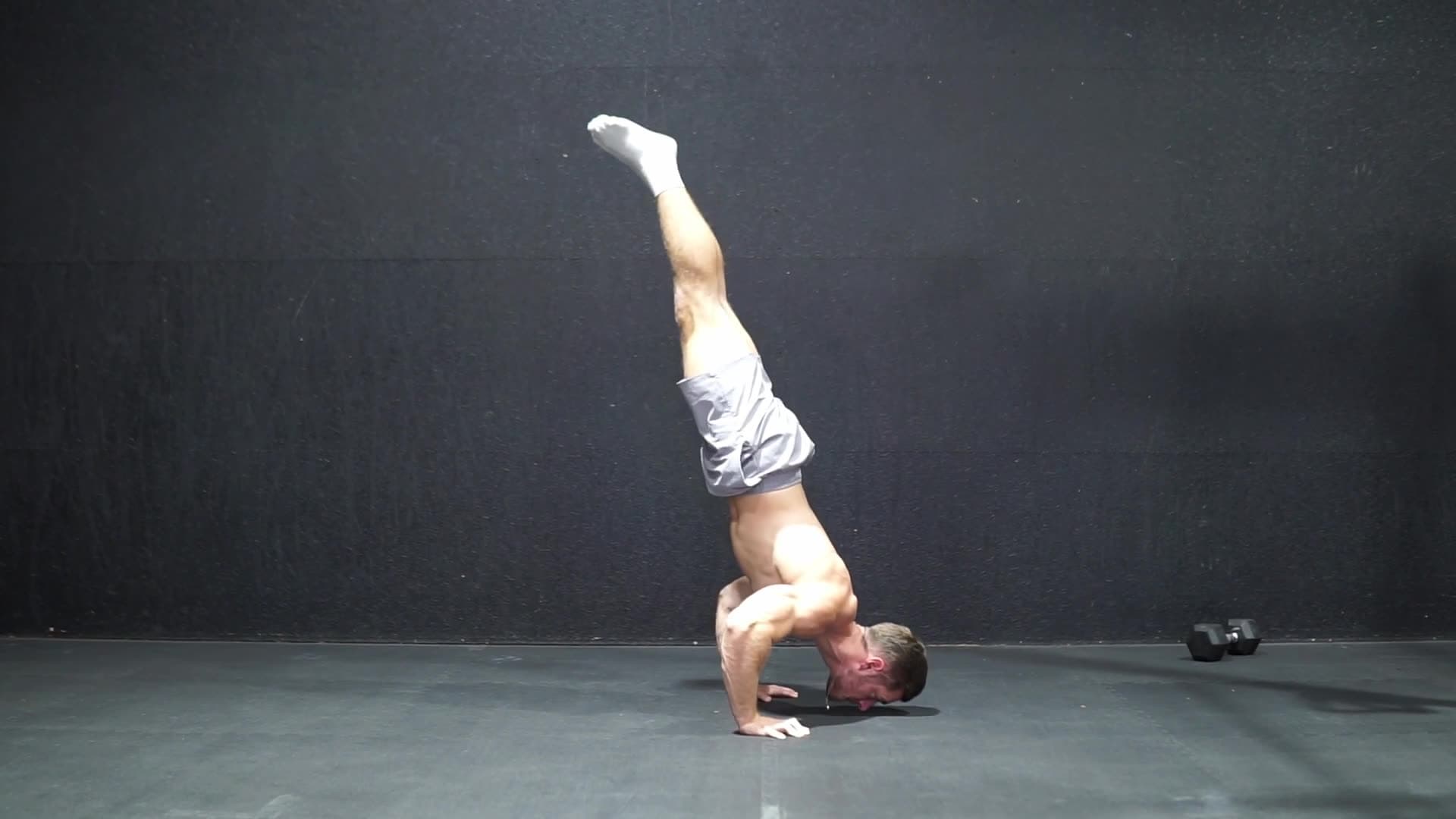
The handstand push up is the overhead press taken to its logical endpoint, no barbell, no leg drive, no safety margin. It is one of the most demanding upper-body movements in calisthenics, and also one of the most rewarding to build toward systematically.
What Is the Handstand Push Up (and Why It's Harder Than It Looks)
A handstand push up is a closed-chain overhead press: the hands are fixed on the floor and the body moves, unlike a barbell or dumbbell press where the implement moves. This one mechanical difference makes it significantly harder than an equivalent barbell overhead press, and understanding why helps explain the entire progression structure.
In a barbell overhead press, the feet are on the floor and provide a stable base. In a HSPU, the feet are in the air and the body must balance throughout the pressing range of motion. There is no leg drive. The head placement at the bottom forces a slightly wider arc than a strict shoulder press. And the total load pressing through the arms is approximately 90-95% of bodyweight: the arms themselves are the offset.
The result is that a full handstand push up requires not just overhead pressing strength, but shoulder stability, core rigidity, and balance skill simultaneously. Overhead pressing 90% of your bodyweight for reps on a barbell would be an elite-level achievement. The HSPU demands equivalent pressing strength plus balance, which is why the progression toward it requires patience and respect for each stage.
The muscles trained: anterior deltoid, lateral deltoid, triceps, and upper chest in the primary pressing role; serratus anterior and rotator cuff as stabilisers; core and glutes maintaining body rigidity throughout.
Prerequisites: The Benchmarks to Hit Before HSPU Training
Two gates must be passed before starting HSPU-specific work. Attempting wall HSPUs without meeting these prerequisites produces the same outcome as every other skipped prerequisite: failed reps, compensated movement patterns, and elevated injury risk.
Gate 1: A 30-second wall handstand with good alignment. This is non-negotiable. The HSPU is a press performed inside a handstand: if the handstand position is unstable or misaligned, every pressing rep is done in a compromised position. The wall handstand must feature a straight body (no banana arch), active shoulders elevated toward the ears, and a controlled hollow body shape. A shaky, arched handstand that happens to last 30 seconds does not meet this requirement.
Gate 2: 10 strict push-ups with full range and control. This confirms baseline pressing capacity and wrist health. Athletes who cannot produce a clean push-up will not have the triceps and shoulder strength needed for the pike push-up progression to feel productive rather than impossible.
A consistent kick-up entry also matters practically: an unreliable kick-up means every wall HSPU session starts with an unpredictable entry that wastes energy and disrupts the pressing position before the set even begins.
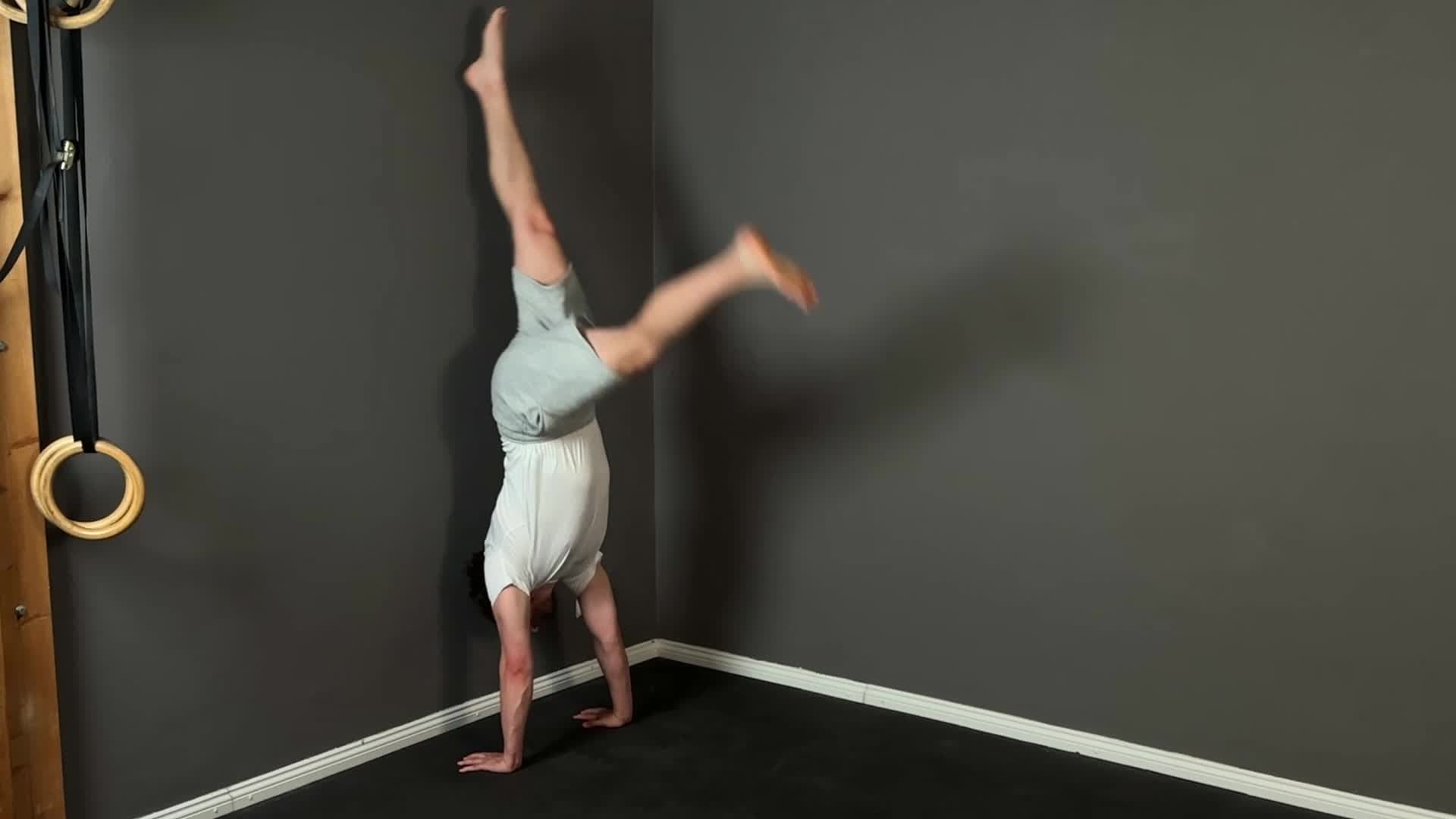
Wall Kick-Up Progressions
Stand about one arm's length away from the wall. Place your hands shoulder-width apart on the floor
Stage 1. Pike Push Ups: Building Overhead Pressing Mechanics
The pike push-up is the HSPU's ground-based cousin. In the standard version, the hips are elevated into an inverted V and the head moves toward the floor between the hands: approximating the HSPU's pressing angle while the grounded feet offset a significant portion of the load. Roughly 50-60% of bodyweight passes through the arms in a standard pike push-up, increasing to 70-80% when the feet are elevated on a box or bench.
This percentage progression is exactly why the pike push-up is the correct first stage: it allows progressive loading of the exact muscles and pressing pattern the HSPU requires, without demanding the balance of a full handstand.
Key technique points that transfer directly to the wall HSPU:
- Hips stay elevated throughout. Dropping the hips to make the rep easier defeats the purpose: keep them high so the pressing angle stays consistent.
- Head moves between the hands, not in front of them. The head should descend between the palms to the floor, not forward past the fingertips. Pushing the head forward loads the cervical spine.
- Elbows track back, not out. Elbow path is the most commonly flawed technique point at this stage. Elbows should move toward the feet, not flare to the sides.
- Press to full lockout. The top of every rep ends with arms fully straight.
Milestone: 3 sets of 5 elevated pike push-ups with feet at hip height, clean technique throughout.
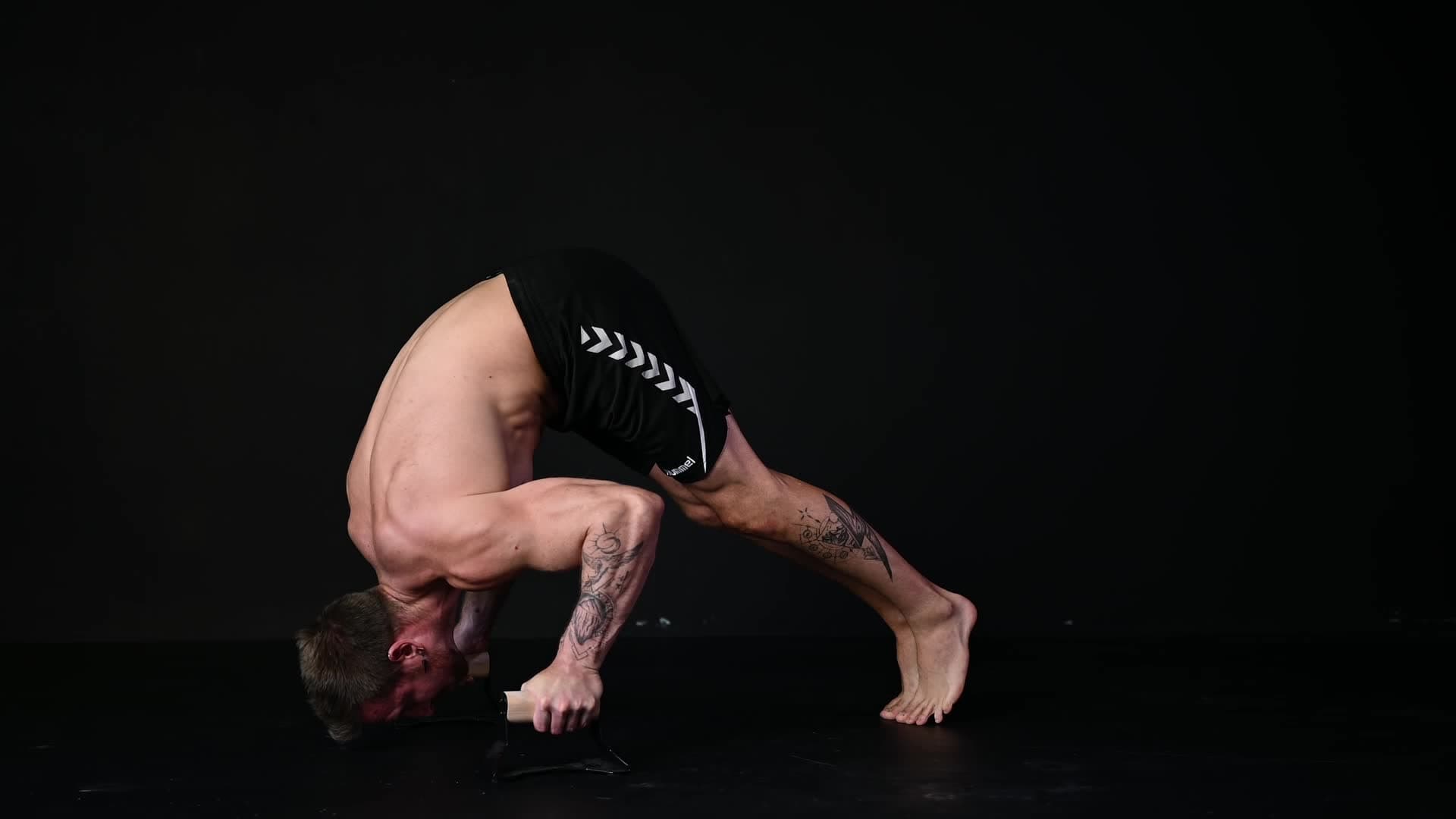
Pike Push Up Progressions
Start in the plank and walk your feet forward to a pike position. Protract the shoulders
Stage 2. Wall HSPU Negatives and Partial Reps
Wall HSPU negatives are the bridge between pike push-ups and full reps. A negative is the eccentric-only version of the HSPU: kick up to a wall handstand, then lower with full control until the head reaches (or nearly reaches) the floor, and do not press back up. Come down, reset, and repeat.
The eccentric phase is where the specific strength adaptation for the HSPU occurs. Trying to press back up before that eccentric strength is built is what creates the frustrating sticking point many athletes encounter: the bottom of the rep feels impossible because the muscles were never trained to resist load there. Negatives solve this directly.
Target: 3-second negatives (three full counts down, controlled throughout), 3 sets of 3-4 reps. Once 3-second negatives feel controlled, begin partial ROM reps: press back 25% of the way up, then 50%, then 75% over successive sessions. This incremental approach eliminates the bottom-position sticking point progressively rather than all at once.
Critical technique note on head placement. At the bottom of a wall HSPU, the head must go between the hands, not in front of them, not to one side. Pushing the head forward of the fingertips creates a lever that loads the cervical spine at the most vulnerable point in the range. Check this by ensuring the head descends between the palms, with the crown of the head making contact with the floor (not the forehead or back of the skull).
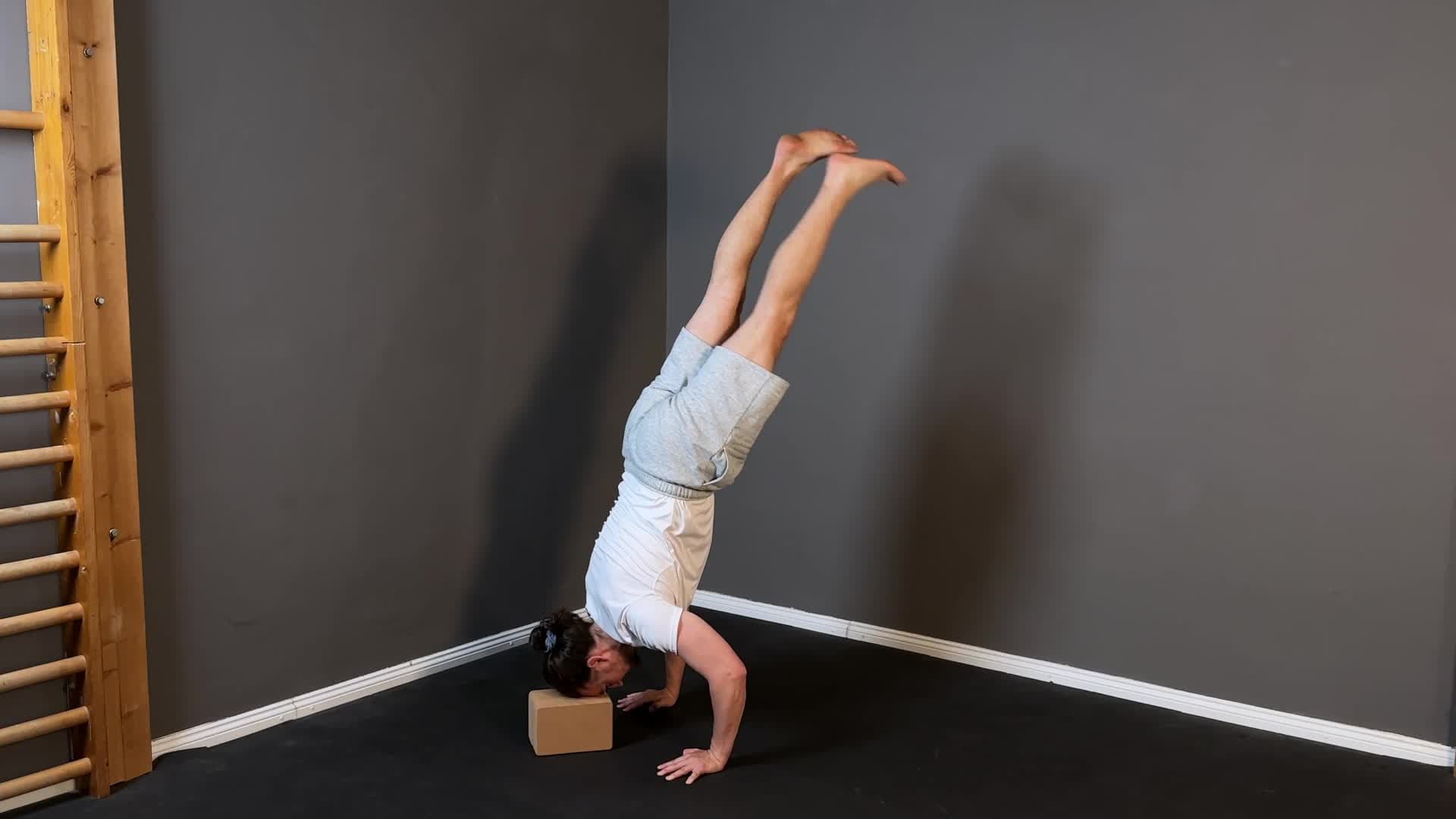
Negative Handstand Push Up Progressions
Keep the core tight and glutes + abs engaged throughout every rep. Lower over 3-5 seconds - the slower the descent, the more strength you build
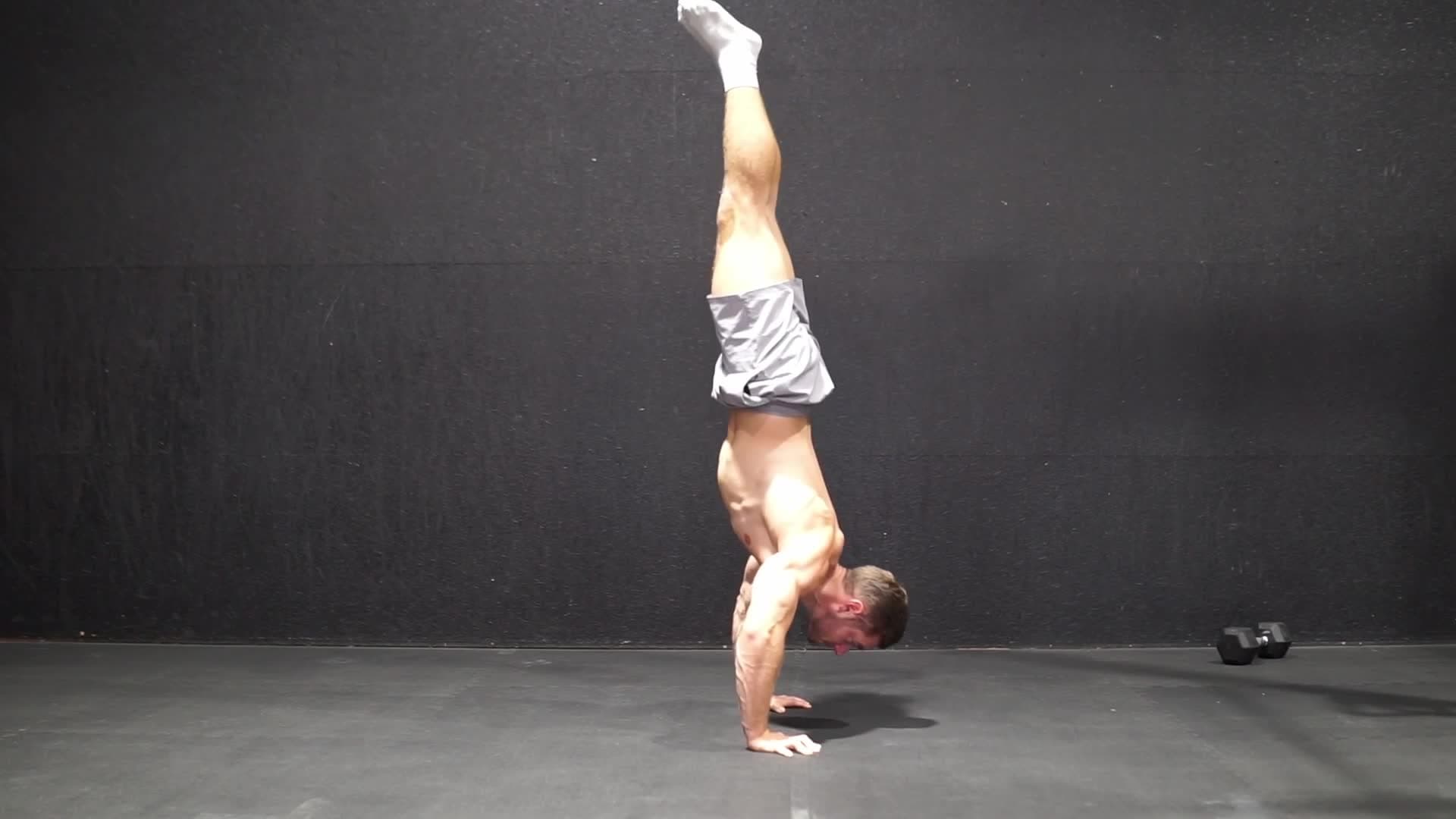
Partial ROM Handstand Push Up Progressions
Start in a stable freestanding handstand with hands shoulder-width apart. Spread fingers wide and actively grip the floor for balance
Stage 3. Full Wall Reps and the Path to Freestanding
A full wall HSPU runs from head-to-floor to complete lockout with the body maintaining its rigid line throughout. The standard milestone before moving toward freestanding work is 3 sets of 5 clean wall reps.
The chest-to-wall (C2W) setup forces a more upright torso and requires greater shoulder mobility: it is the stricter version and the one that better prepares the shoulder musculature for the demands of the full rep. The back-to-wall (B2W) setup is slightly more accessible initially because it permits a small forward lean.
Most athletes benefit from doing both: start with B2W negatives and partial reps, transition to C2W for full reps once the shoulder mobility allows it. The C2W full rep is the version that best prepares the shoulder for freestanding HSPU demands.
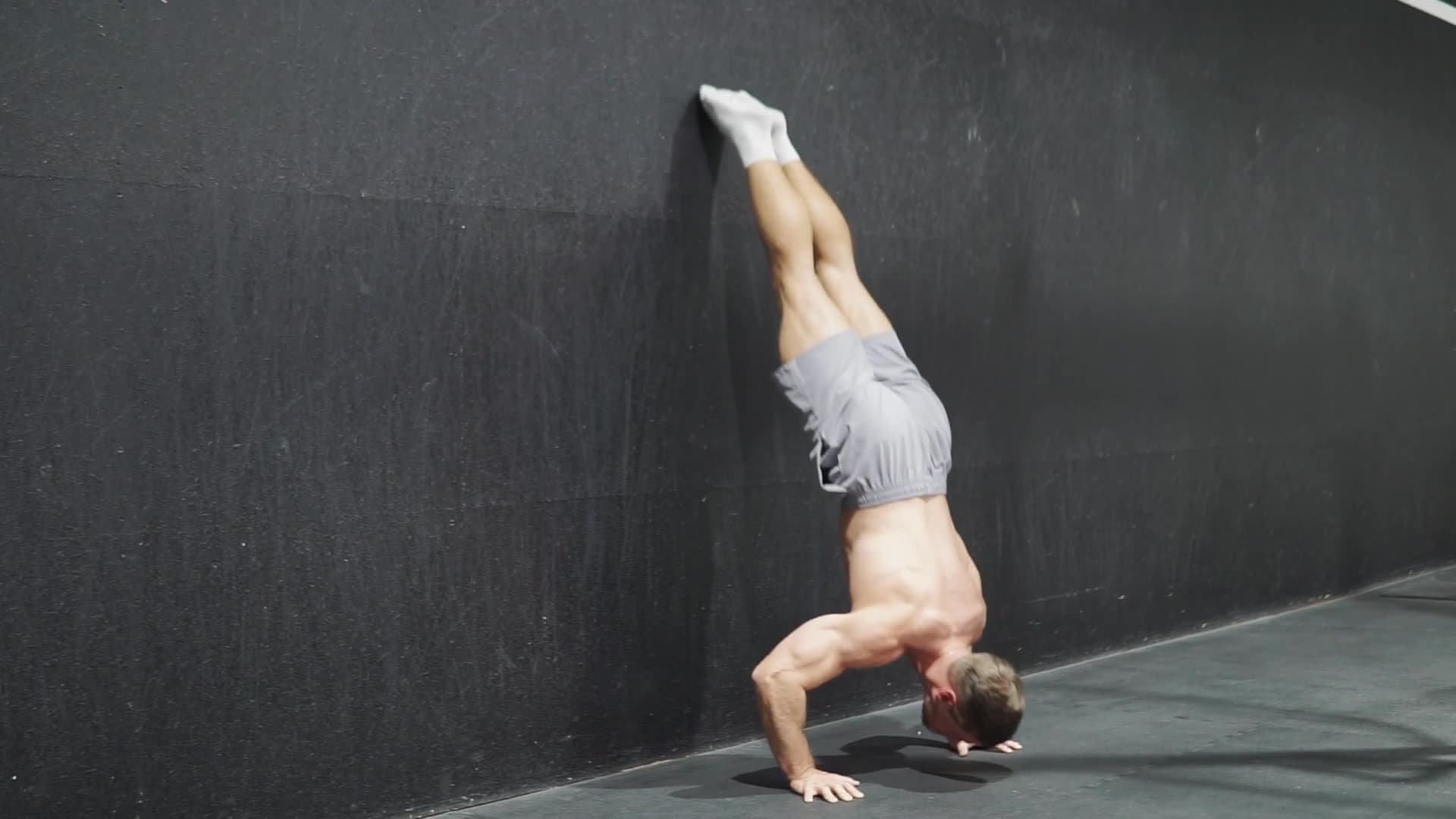
C2W Handstand Push Up Progressions
Place hands 30-50cm away from the wall so the body is at a slight angle, not completely vertical. Keep the core tight and glutes+abs engaged
B2W Handstand Push Up Progressions
Keep the core tight and glutes+abs engages. Maintain balance with your finger pressure
The freestanding HSPU is a distinct skill, not simply a wall HSPU performed away from the wall. It requires maintaining balance through an active pressing range: the body must balance while the arms are bending and extending, which means the stabilising muscles work in a fundamentally different way than in the static handstand hold. Expect significant early failure; this is inherent to the skill, not a sign that the training is failing.
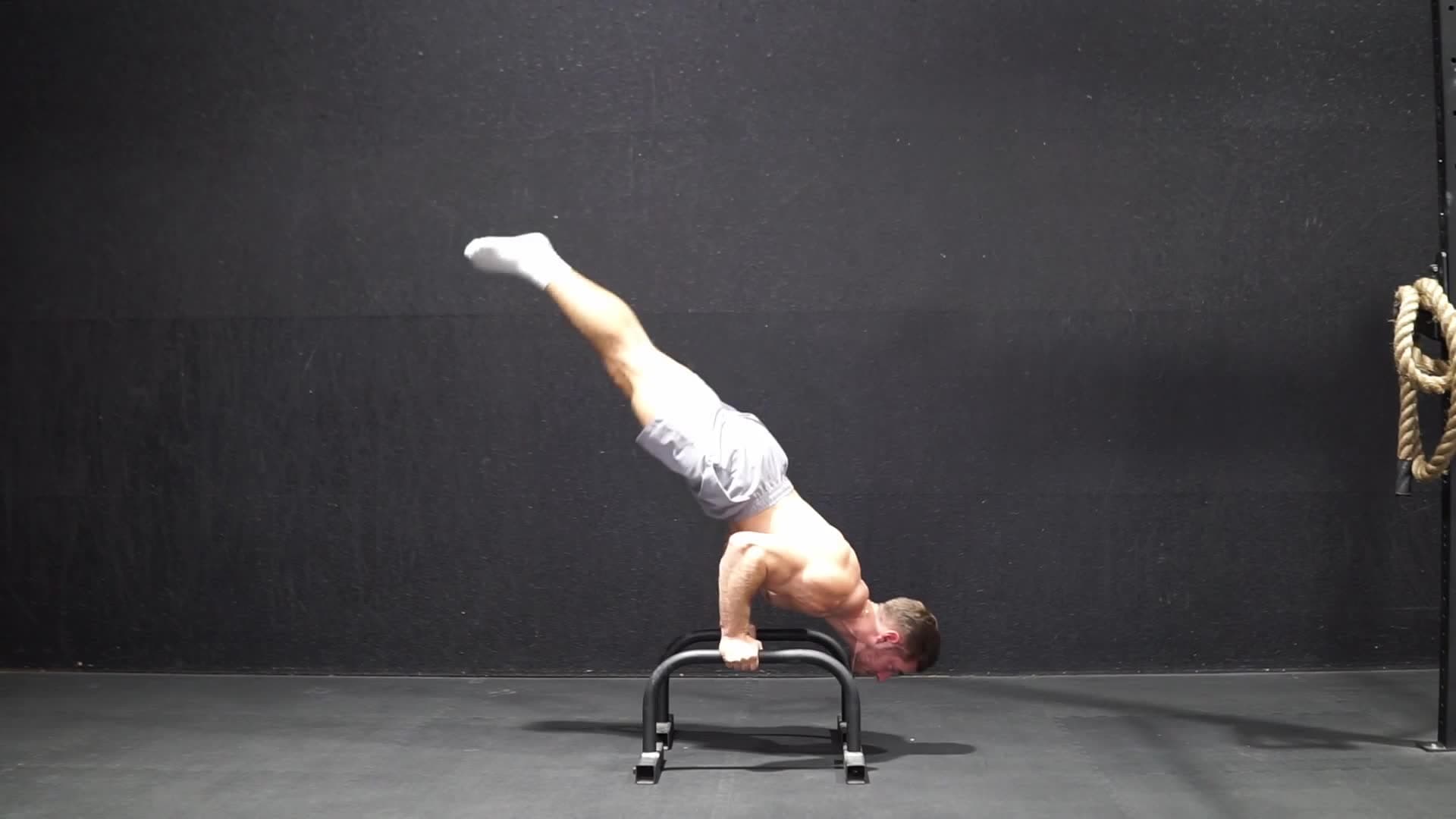
Handstand Push Up Progressions
Keep the core tight and glutes + abs engaged. Lean the shoulders forward as you descend, keeping hips stacked over wrists
Start freestanding attempts with a spotter or in a space where you can bail safely. The Simple Calisthenics app structures the entire HSPU skill tree from wall to freestanding with adaptive checkpoints at each stage.
How to Structure Your HSPU Training Week
Train HSPU-specific work three days per week, with 48 hours of recovery between sessions. Always program it as the first pressing movement of the session: HSPU quality drops sharply with fatigue, and the technique demands make fatigued reps counterproductive.
| Stage | Sets/Reps | Rest | Notes |
|---|---|---|---|
| Stage 1: Pike push-ups | 4-5 sets × 5-8 reps | 2 min | Elevated feet; strict form |
| Stage 2: Negatives | 3-4 sets × 3-4 reps | 2-3 min | 3-second descent; do not press up |
| Stage 2: Partial reps | 3-4 sets × 3-5 reps | 2-3 min | Increase ROM each week |
| Stage 3: Full wall reps | 3 sets × 3-5 reps | 3 min | Stop 1-2 reps short of failure |
Never train HSPU to failure. The wrists and cervical spine are loaded in an unusual position: grinding through fatigue increases the risk of both compensated reps and joint irritation. Stop 1-2 reps short of failure on every working set.
Common Mistakes That Stall Your HSPU Progress
Five specific errors account for the majority of HSPU plateaus.
-
Skipping the handstand prerequisite. Attempting HSPUs without a stable 30-second wall hold means pressing in a position you cannot control. The wrists and shoulders are then loaded in an unstable position, which both limits progress and significantly raises injury risk.
-
Elbow flare. Elbows should track toward the feet throughout the press, not out to the sides. Flared elbows reduce triceps and lateral deltoid activation, increase rotator cuff stress, and produce a weaker pressing line. Reinforce the tucked-elbow cue during every pike push-up set so it is automatic in the wall HSPU.
-
Head pushed forward at the bottom. The head goes between the hands, always. Pushing it forward past the fingertips shifts load onto the cervical spine at the bottom position: an acute loading angle that can cause neck discomfort and chronic irritation with repeated exposure.
-
Skipping negatives. Jumping from elevated pike push-ups directly to full wall reps without the eccentric strength built by negatives creates a sticking point at the bottom of the rep that is very hard to break through. Negatives are not an optional stage: they are what makes the full rep mechanically accessible.
-
Training HSPU after other shoulder work. If the pressing workout begins with dumbbell shoulder presses or dips, the HSPU is attempted with pre-fatigued shoulders. This produces both worse reps and slower adaptation. HSPU must be first.
Frequently asked questions
How many push-ups do I need before handstand push-ups?
Strength benchmarks matter more than push-up numbers, but 10 strict push-ups and 3-5 elevated pike push-ups with feet at hip height are solid readiness indicators for wall HSPU negatives. A reliable 30-second wall handstand with good alignment is the non-negotiable prerequisite.
What muscles do handstand push-ups work?
The HSPU primarily trains the anterior deltoid, lateral deltoid, triceps, and upper chest. The serratus anterior and rotator cuff work as stabilisers throughout the full range. The core and glutes maintain body rigidity throughout. It is one of the most complete upper-body pressing movements available without equipment.
How long does it take to learn handstand push-ups?
Athletes with an existing wall handstand hold and solid push-up strength can often achieve their first wall HSPU negatives within 2-4 weeks and first full wall reps within 4-12 weeks. Complete beginners starting from scratch should expect 6-12 months to first full wall reps.
Are handstand push-ups dangerous?
Not when progressed correctly. The main risks are wrist overload (bypassed by meeting the handstand prerequisite) and cervical spine loading at the bottom position, avoided by correct head placement between the hands. Rushing from negatives to full reps before building eccentric strength is the most common cause of injury.
Is a handstand push-up harder than a shoulder press with your bodyweight?
Yes, for most athletes. The HSPU presses roughly 90-95% of bodyweight in a closed-chain position with no leg drive, while simultaneously maintaining balance. Overhead pressing 90% of bodyweight for reps on a barbell would be an elite-level lift: the HSPU demands equivalent strength plus balance skill.
Follow a structured handstand push up progression in the Simple Calisthenics app: from your first pike push-up to freestanding reps, every stage tracked and adapted to your level.
Start free trialFAQ
- How many push-ups do I need before handstand push-ups?
- Strength benchmarks matter more than push-up numbers, but 10 strict push-ups and 3-5 elevated pike push-ups with feet at hip height are solid readiness indicators for wall HSPU negatives. A reliable 30-second wall handstand with good alignment is the non-negotiable prerequisite.
- What muscles do handstand push-ups work?
- The HSPU primarily trains the anterior deltoid, lateral deltoid, triceps, and upper chest. The serratus anterior and rotator cuff work as stabilisers throughout the full range. The core and glutes maintain body rigidity throughout. It is one of the most complete upper-body pressing movements available without equipment.
- How long does it take to learn handstand push-ups?
- Athletes with an existing wall handstand hold and solid push-up strength can often achieve their first wall HSPU negatives within 2-4 weeks and first full wall reps within 4-12 weeks. Complete beginners starting from scratch should expect 6-12 months to first full wall reps.
- Are handstand push-ups dangerous?
- Not when progressed correctly. The main risks are wrist overload (bypassed by meeting the handstand prerequisite) and cervical spine loading at the bottom position, avoided by correct head placement between the hands. Rushing from negatives to full reps before building eccentric strength is the most common cause of injury.
- Is a handstand push-up harder than a shoulder press with your bodyweight?
- Yes, for most athletes. The HSPU presses roughly 90-95% of bodyweight in a closed-chain position with no leg drive, while simultaneously maintaining balance. Overhead pressing 90% of bodyweight for reps on a barbell would be an elite-level lift: the HSPU demands equivalent strength plus balance skill.