Self-Assisted One Arm Pull Up Progressions
Muscles worked
- Bicep
- Lat
- Forearm Flexors
- Chest
- Trapezius
Equipment
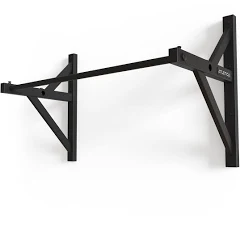
Form Cues
-
Hang from the bar with one arm (the working hand) at full extension. This arm does the pulling while the other arm provides assistance
-
Place your free hand on the working arm to provide self-assistance by pressing down. The position of this support hand determines how much help you get
-
Depress and retract the working shoulder before initiating the pull. This engages the lat and creates a strong starting position for the one arm pull
-
Pull your chin over the bar by driving the working elbow down and back. The working arm should be the primary mover throughout the entire range of motion
-
Control the descent with a 2-3 second eccentric on every rep. Slow negatives build the tendon and connective tissue strength needed for a full one arm pull up
-
Brace your core throughout the entire movement to prevent your body from rotating or twisting toward the support-hand side. Anti-rotation is a key skill in one arm pulling
-
Do not change the position of your support hand during a rep. Sliding the hand to a different spot mid-pull is cheating the progression and undermines consistent tracking of progress
-
Progress by moving the support hand further up the working arm over time: wrist, forearm, elbow, biceps, and finally shoulder. Each position reduces the mechanical advantage of the support hand until you are ready for a full unassisted one arm pull up
Progressions
01 Wrist-Grip One Arm Pull Up
-
Grab the bar with your working hand and hang at full arm extension with your shoulder packed down
-
Place your free hand on the wrist of the working arm, wrapping around it from below. This is the highest-assistance position in the self-assisted progression series
-
Press down firmly with the support hand throughout the pull to assist the working arm. The wrist position gives you the most mechanical leverage to help
-
Depress and retract the working shoulder before initiating the pull to engage your lat fully
-
Pull until your chin clears the bar, driving your elbow down and back
-
Lower back down with a controlled 2-3 second eccentric, keeping the support hand pressing steadily
-
Brace your core throughout the movement to prevent your body from rotating or twisting to the support-hand side
-
Avoid gripping the wrist too tightly with the support hand. Use just enough pressure to assist the pull without turning it into a regular two-arm pull up
-
02 Forearm-Grip One Arm Pull Up
-
Grab the bar with your working hand and hang at full arm extension with your shoulder actively depressed
-
Place your free hand on the mid-forearm of the working arm, gripping from below. This provides moderate-high assistance, slightly less leverage than the wrist position
-
Press down with the support hand throughout the pull. Because the hand is further from the bar, you get slightly less mechanical advantage than at the wrist
-
Depress and retract the working shoulder before initiating the pull to fully engage your lat
-
Pull until your chin clears the bar, focusing on driving the elbow down and back
-
Lower back down with a controlled 2-3 second eccentric, maintaining consistent support hand pressure
-
Brace your core throughout the movement to prevent your body from rotating toward the support-hand side
-
Keep the support hand locked in position on the mid-forearm. Do not let it slide down toward the wrist for extra help during difficult reps
-
03 Elbow-Grip One Arm Pull Up
-
Grab the bar with your working hand and hang at full arm extension with your shoulder packed down
-
Place your free hand on the elbow pit (inner crease) of the working arm. This is the medium-assistance position where pressing down becomes less effective and the support hand acts more as a stabilizer
-
The support hand at the elbow provides noticeably less help than the forearm or wrist positions. Focus on pulling primarily with the working arm while using the support hand for balance and light assistance
-
Depress and retract the working shoulder before initiating the pull to fully engage your lat
-
Pull until your chin clears the bar, driving your elbow down and back. You will feel significantly more load on the working arm compared to earlier progressions
-
Lower back down with a controlled 2-3 second eccentric. The elbow position makes it harder to assist during the negative, so focus on lat control
-
Brace your core tightly throughout the movement. The reduced assistance at this position makes rotational forces stronger, so anti-rotation becomes even more important
-
Keep the support hand planted in the elbow crease. Do not let it drift down to the forearm during the set
-
04 Biceps-Grip One Arm Pull Up
-
Grab the bar with your working hand and hang at full arm extension with your shoulder actively depressed
-
Place your free hand on the biceps of the working arm, roughly halfway between elbow and shoulder. At this position, pressing down provides very limited mechanical advantage, so the assistance is mostly psychological and for light stabilization
-
Accept that this progression is close to an unassisted one arm pull up. The support hand on the biceps offers minimal pressing leverage, so the working arm must do the vast majority of the work
-
Depress and retract the working shoulder before initiating the pull to fully engage your lat
-
Pull until your chin clears the bar, driving your elbow down and back. This will feel substantially harder than the elbow-grip position
-
Lower back down with a controlled 2-3 second eccentric. Focus on smooth lat engagement rather than relying on the support hand during the descent
-
Brace your core aggressively to prevent rotation. With almost no effective assistance, anti-rotation stability must come entirely from your trunk
-
Keep the support hand planted on the biceps. Do not let it slide down toward the elbow for extra leverage during tough reps
-
05 Shoulder-Grip One Arm Pull Up
-
Grab the bar with your working hand and hang at full arm extension with your shoulder packed down
-
Place your free hand on the shoulder or upper deltoid of the working arm. This is the final progression before a full one arm pull up. The support hand has almost zero mechanical advantage here since pressing down on the shoulder barely assists the pull
-
Treat this progression as a near-unassisted one arm pull up. The hand on the shoulder serves primarily as a confidence tool and a very slight stabilizer, not a meaningful source of pulling force
-
Depress and retract the working shoulder before initiating the pull to fully engage your lat
-
Pull until your chin clears the bar, driving your elbow down and back. The effort should feel nearly identical to a full one arm pull up
-
Lower back down with a controlled 2-3 second eccentric. You are controlling the descent almost entirely with the working arm
-
Brace your core maximally to prevent any rotation or lateral sway. Without meaningful assistance, anti-rotation demands are at their highest
-
Keep the support hand resting on the shoulder throughout every rep. If you can complete clean sets at this position, you are ready to attempt a full unassisted one arm pull up
-
Common mistakes
Built into a program made for you
Every exercise here adapts to your goals, equipment and schedule inside the app.