Prone External Rotation Progressions
Muscles worked
- Rear Shoulder
- External Rotators
- Middle Traps
- Upper Back
- Chest
- Subscapularis
Form Cues
-
Lie on your stomach with your upper arm at a 90-degree angle to your body
-
Your elbow should be at shoulder height with your forearm pointing down
-
Hold a light weight or resistance band in your hand
-
Engage your trunk and keep your shoulder stable
-
Rotate your forearm upward while keeping your elbow on the floor
-
Perform the movement slowly and in a controlled manner
-
Hold briefly at the highest point of rotation
-
Lower the weight slowly back down
-
Avoid lifting your shoulder or twisting your body
Progressions
01 Wall Standing Iso External Rotation
-
Stand with your entire back flat against a wall, feet about 15 centimeters from the base of the wall, and raise your arms into a “goalpost” position with elbows bent at 90 degrees and upper arms at shoulder height.
-
Press the backs of both hands and your elbows firmly into the wall, actively engaging the external rotators of your shoulders: you should feel the muscles between your shoulder blades and the back of your shoulders working.
-
Keep your lower back pressed against the wall by lightly bracing your core: avoid arching away from the wall, which would reduce the effectiveness of the isometric hold.
-
Pull your shoulders down and away from your ears throughout the hold, ensuring the effort comes from your rotator cuff muscles rather than your upper traps.
-
Focus on pressing the backs of your hands into the wall with equal force on both sides to promote balanced activation of the external rotators.
-
Maintain steady, rhythmic breathing throughout the hold: inhale through your nose and exhale through your mouth, avoiding any breath-holding that would create unnecessary tension.
-
Hold the isometric position for 20 to 30 seconds per set, aiming for a moderate contraction intensity of about 50 to 70 percent of your maximum effort.
-
This is the entry-level progression and is ideal for building baseline external rotation strength: once you can comfortably hold for 30 seconds, progress to the next variation.
-
02 Bent-Over External Rotation
-
Stand with feet hip-width apart and hinge forward at the hips to approximately 45 degrees, keeping your back flat and your core braced to maintain a neutral spine throughout.
-
Raise your working arm to the side so that your upper arm is roughly parallel to the floor, and bend your elbow to 90 degrees with your forearm hanging straight down toward the ground.
-
Externally rotate your shoulder by lifting your hand and forearm upward in an arc until your forearm points toward the ceiling, keeping your elbow locked in place at shoulder height.
-
The bent-over position uses gravity as resistance against the external rotation, making this progression harder than the standing wall variation without requiring any equipment.
-
Control the lowering phase for 2 to 3 seconds as you return your forearm back to the starting position: do not let gravity pull your hand down passively.
-
Keep your shoulder blade pinched toward your spine on the working side to stabilize the shoulder joint and ensure the rotator cuff muscles do the work.
-
Perform all repetitions on one side before switching to the other arm, aiming for 8 to 15 controlled repetitions per side per set.
-
Breathe out as you rotate your hand upward and breathe in as you lower it, maintaining a smooth and steady rhythm throughout the set.
-
03 Standing Prone External Rotation
-
Stand upright with your feet shoulder-width apart, facing a band or cable machine that is anchored at approximately elbow height on your working side.
-
Grasp the handle or band end with your working hand, bend your elbow to 90 degrees, and keep your upper arm pinned firmly against your side throughout the entire movement.
-
Externally rotate your shoulder by pulling the band or cable outward and away from your body, keeping your elbow glued to your ribcage so the rotation happens purely at the shoulder joint.
-
Squeeze the external rotators at the end range of the movement for a brief pause of 1 to 2 seconds before beginning the controlled return to the starting position.
-
Lower the band or cable back slowly over 2 to 3 seconds, resisting the pull: the eccentric phase is equally important for building rotator cuff strength and control.
-
Keep your torso still and avoid rotating your trunk to cheat the movement: if you find yourself twisting, reduce the resistance and focus on isolating the shoulder.
-
Perform 10 to 15 controlled repetitions on one side, then switch to the other arm to ensure balanced development of both shoulders.
-
Breathe out as you rotate outward and breathe in as you return, maintaining an upright posture with your shoulders down and away from your ears throughout the set.
-
04 Prone Lying External Rotation
-
Lie face down on the floor or a flat bench with your forehead resting on your free hand or a small towel for comfort, keeping your neck in a neutral position.
-
Extend your working arm out to the side so that your upper arm is at a 90-degree angle to your torso, and bend your elbow to 90 degrees with your forearm hanging straight down toward the floor.
-
Externally rotate your shoulder by lifting your hand and forearm upward in an arc, keeping your elbow firmly pressed into the floor or bench at all times: the elbow should not lift or shift.
-
Rotate as far as your shoulder allows without compensating by lifting the shoulder blade off the surface or twisting your torso: your range of motion will improve over time.
-
Lower your forearm back down with control over 2 to 3 seconds, resisting gravity throughout the eccentric phase rather than letting the hand drop.
-
Keep your core lightly engaged and your hips pressed into the floor to prevent any trunk rotation that would cheat the movement.
-
Perform 10 to 15 slow, controlled repetitions on one side before switching to the other arm, ensuring balanced development of both shoulders.
-
Breathe out as you rotate your forearm upward and breathe in as you lower it, maintaining a relaxed neck and jaw throughout each repetition.
-
05 Elbow-Elevated Prone External Rotation
-
Lie face down on the floor or a bench and place a yoga block, foam pad, or small box under your working elbow to elevate it, with your upper arm extended out to the side at 90 degrees to your torso.
-
Bend your elbow to 90 degrees so your forearm hangs straight down from the elevated block, creating a greater range of motion for the external rotation compared to the flat-floor version.
-
Externally rotate your shoulder by lifting your hand and forearm upward in an arc while keeping your elbow firmly planted on the block: the elevation allows the forearm to travel through a larger rotational arc.
-
This variation increases the demand on the external rotators by allowing your forearm to drop below the level of your elbow at the bottom, loading the muscles through a fuller range.
-
Control the lowering phase for 2 to 3 seconds, resisting gravity as your forearm returns past the horizontal and down toward the floor: this is where the external rotators are challenged the most.
-
Keep your torso flat against the floor and your core engaged to prevent any trunk rotation or shoulder blade lifting that would reduce the isolation of the rotator cuff.
-
Perform 10 to 15 controlled repetitions on one side before switching to the other arm, focusing on quality of movement over speed.
-
Breathe out during the upward rotation and breathe in during the lowering phase, keeping your neck relaxed by resting your forehead on your free hand.
-
06 Loaded Prone Lying External Rotation
Dumbbells or Kettlebells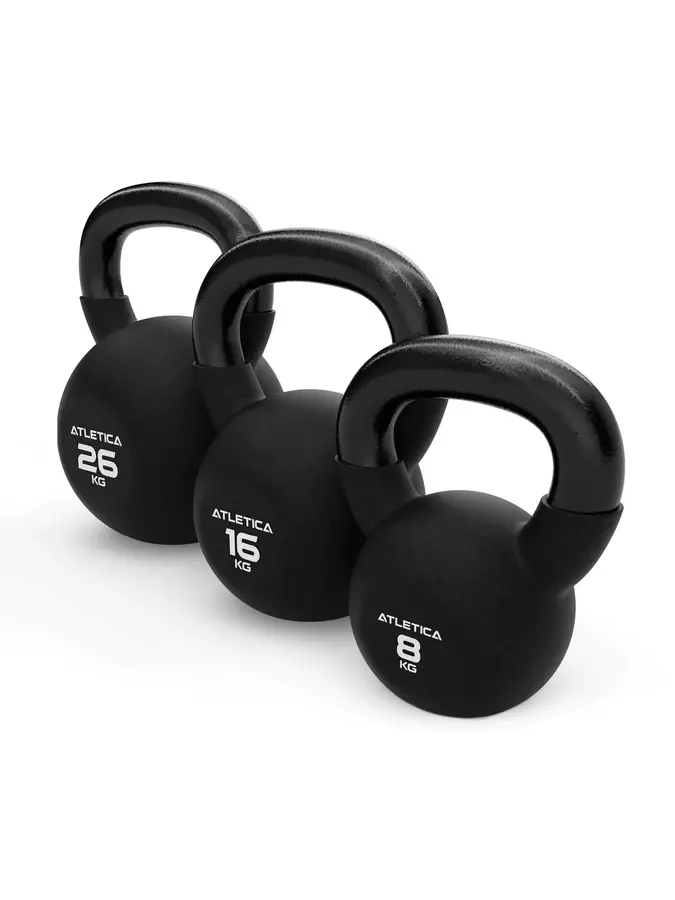
-
Lie face down on the floor or a flat bench with your forehead resting on your free hand, your working arm extended to the side at 90 degrees to your torso, and a light dumbbell or kettlebell held in your working hand.
-
Bend your working elbow to 90 degrees so the weight hangs straight down toward the floor: start with a very light load of 1 to 3 kilograms, as the rotator cuff muscles are small and easily overloaded.
-
Externally rotate your shoulder by lifting the weight upward in an arc until your forearm reaches vertical or as high as your mobility allows, keeping your elbow firmly pressed into the floor throughout.
-
The added resistance from the weight strengthens the external rotators through their full range of motion, making this the most advanced progression in this series.
-
Control the lowering phase for 3 to 4 seconds, resisting the pull of the weight: the eccentric loading under resistance is where the most strength and tendon adaptation occurs.
-
Keep your shoulder blade pinned flat against your back and your torso completely still: if you notice your trunk twisting or your shoulder lifting off the floor, reduce the weight immediately.
-
Perform 8 to 12 controlled repetitions on one side before switching to the other arm, prioritizing perfect form and full range of motion over heavier weight.
-
Breathe out as you rotate the weight upward and breathe in as you lower it, keeping the tempo slow and deliberate to maximize time under tension for the rotator cuff muscles.
-
Common mistakes
Built into a program made for you
Every exercise here adapts to your goals, equipment and schedule inside the app.