Mantle/Difference Pull Up Progressions
Muscles worked
- Bicep
- Lat
- Forearm Flexors
- Chest
- Trapezius
Equipment
Form Cues
-
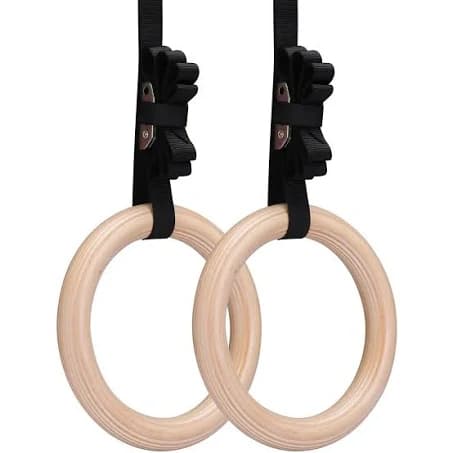
Set two rings at different heights, with the height difference matching your chosen progression level
-
Grip the higher ring with your working arm using a neutral or supinated grip for maximum pulling power
-
Grip the lower ring with your assisting arm, using it only to supplement the working arm's effort
-
Pull primarily through the higher arm by driving your elbow down and back toward your hip
-
Keep your body as vertical as possible throughout the movement to prevent twisting or rotating toward the lower ring
-
Actively depress the working shoulder throughout the entire rep, keeping it packed away from your ear
-
Control the eccentric phase for 2-3 seconds, resisting gravity with the working arm on the way down
-
Progress toward one-arm pull-ups by gradually increasing the height difference between the two rings over time
Progressions
01 10cm/4in Difference Pull Up
-
Set rings with only 10cm/4in height difference, the smallest increment and closest to a standard pull-up
-
Grip the higher ring with your working arm and the lower ring with your assisting arm
-
At this small difference, both arms can still contribute significantly, so consciously emphasize the higher arm
-
Focus on learning to shift load unilaterally by pulling slightly harder with the working arm
-
Keep your body vertical and square to the rings, resisting any tendency to twist even at this small offset
-
Depress and retract the working shoulder at the start of each rep before initiating the pull
-
Control the lowering phase for 2-3 seconds, paying attention to which arm is doing the braking work
-
Use this progression to build the motor pattern of unilateral pulling before moving to larger height differences
-
02 20cm/8in Difference Pull Up
-
Set rings with 20cm/8in height difference, creating a moderate asymmetry between arms
-
Grip the higher ring with your working arm; the lower arm now reaches noticeably further down
-
The increased offset means the working arm must handle a greater share of the load than at 10cm
-
Drive the working elbow down and back toward your hip, initiating the pull from the lat
-
The assisting arm can still bend and pull, but focus on using it primarily for balance rather than force
-
Actively prevent your torso from rotating toward the lower ring by bracing your core
-
Lower under control for 2-3 seconds, feeling the majority of the eccentric load through the working arm
-
Ensure you can complete clean reps with the working arm dominant before progressing to 30cm
-
03 30cm/12in Difference Pull Up
-
Set rings with 30cm/12in height difference, a significant offset where the lower arm has reduced leverage
-
Grip the higher ring with your working arm; the lower ring is now far enough down that the assisting arm is partially extended
-
The assisting arm's bent position provides less mechanical advantage, forcing the working arm to handle most of the pull
-
Drive hard through the working lat, pulling the elbow down and back as the primary movement driver
-
The assisting arm should guide and stabilize rather than actively pull, think of it as a safety net
-
Anti-rotation becomes more challenging at this offset, so engage your obliques to stay square to the rings
-
Control the eccentric for 2-3 seconds, which builds the tendon strength needed for heavier one-arm loading
-
This is a key transitional stage where you shift from bilateral to predominantly unilateral pulling
-
04 40cm/16in Difference Pull Up
-
Set rings with 40cm/16in height difference, where the assisting arm's role shifts primarily to stability
-
Grip the higher ring with your working arm; the lower ring is now low enough that the assisting arm is mostly extended
-
The assisting arm provides very little pulling force at this angle and serves mainly to prevent rotation and provide balance
-
Generate nearly all upward force through the working arm, driving the elbow powerfully toward your hip
-
Expect a significant strength demand on the working lat, bicep, and brachialis at this level
-
Fight hard against body rotation as the large offset creates a strong twisting force toward the lower side
-
Control the eccentric for 2-3 seconds, ensuring the working arm decelerates the descent without help
-
At 40cm, you are training true one-arm pull-up strength with a stability aid, so treat each rep as a near-maximal effort
-
05 50cm/20in Difference Pull Up
-
Set rings with 50cm/20in height difference, a large offset where the assisting arm is nearly straight and provides minimal pull
-
Grip the higher ring with your working arm; the lower ring requires the assisting arm to reach far down with an almost fully extended elbow
-
At this difference, the assisting arm functions almost like holding a towel or strap, offering only light finger-pressure support
-
Pull entirely through the working arm, treating this as a one-arm pull-up with minimal tactile guidance from the other hand
-
Focus on scapular depression and retraction before initiating the pull to ensure proper lat engagement under heavy unilateral load
-
Anti-rotation is critical: the 50cm offset creates a strong asymmetric force, so brace your core hard throughout each rep
-
Lower for a slow 2-3 second eccentric with the working arm doing all the work, building the connective tissue resilience needed for OAP
-
If you can complete 3-5 clean reps per side at this level, you are very close to a full one-arm pull-up
-
06 60cm/24in Difference Pull Up
-
Set rings with 60cm/24in height difference, a very large offset that is essentially a one-arm pull-up with fingertip support
-
Grip the higher ring with your working arm; the assisting hand lightly contacts the lower ring with fingertips only
-
The assisting arm is fully extended and provides virtually no pulling assistance, only light tactile feedback for balance
-
Execute the entire pull as a one-arm pull-up, driving the working elbow aggressively down toward your hip
-
Maintain maximum scapular depression on the working side, as any shoulder elevation will leak force and break form
-
Your body will strongly want to rotate at this extreme offset, counter this by powerfully engaging your entire core
-
Control the eccentric for 2-3 seconds with full one-arm loading, this builds the specific strength for removing the lower ring entirely
-
This progression is the final preparation step before attempting unassisted one-arm pull-ups
-
07 70cm/28in Difference Pull Up
-
Set rings with 70cm/28in height difference, the extreme maximum offset that is virtually identical to an unassisted one-arm pull-up
-
Grip the higher ring with your working arm; the lower ring is so far down that your assisting arm hangs nearly straight below you
-
The assisting hand barely touches the lower ring and provides almost zero mechanical assistance, serving only as a psychological safety cue
-
Execute a full one-arm pull-up through the working arm, as the 70cm offset eliminates any meaningful contribution from the lower hand
-
Full scapular control is essential: depress and retract the working shoulder blade before every rep to protect the joint under maximal load
-
Anti-rotation at 70cm requires elite core strength, brace as if performing a heavy single-arm deadlift to keep your body from spinning
-
Control the eccentric for 2-3 seconds under complete one-arm loading, which is the exact eccentric demand of an unassisted OAP
-
Successfully completing reps at this level means you are ready to attempt the one-arm pull-up without the lower ring
-
Common mistakes
Built into a program made for you
Every exercise here adapts to your goals, equipment and schedule inside the app.