L-Sit Pull Up Progressions
Muscles worked
- Lat
- Bicep
- Trapezius
- Forearm Flexors
- Middle Traps
- Rear Neck
- Rear Shoulder
- Forearm Extensors
- External Rotators
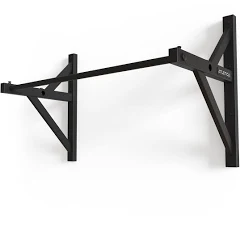
Equipment
Form Cues
-
Hang from the bar and raise your legs to 90 degrees (L-sit position) before initiating the pull: this is a two-part setup
-
Maintain the L-sit throughout the entire pull-up: the legs must stay at or above 90 degrees at all times
-
Depress and retract the shoulder blades to initiate, then pull the chest toward the bar driving elbows down and back
-
The L-sit makes the pull-up significantly harder by shifting your center of gravity forward and demanding constant core engagement
-
Pull until chin clears the bar, hold briefly, then lower with control over 2 seconds: legs must not drop during the descent
-
Keep a neutral spine: avoid rounding the lower back to compensate for weak hip flexors
-
If the legs drop during the pull, regress to a tucked variation until hip flexor and core endurance improves
Progressions
01 Tucked L-Sit Pull Ups
-
Hang from the bar and tuck your knees tightly to your chest: thighs should be at or above 90 degrees to the torso
-
This shortened lever is the easiest L-sit pull-up variation: it reduces the core demand while still training the movement pattern
-
Depress the shoulder blades, then pull your chest to the bar driving elbows down and back
-
Keep the knees tucked tight throughout the entire rep: do not let them drop as you pull up or lower down
-
Pull until chin clears the bar, hold briefly, then lower with control to full arm extension
-
Focus on keeping the shoulders depressed: the tuck makes it harder to feel scapular engagement
-
If you cannot maintain the tuck during the pull, strengthen your core and hip flexors separately before attempting this
-
02 Adv. Tucked L-Sit Pull Ups
-
Hang from the bar and bring your knees up in an advanced tuck: knees still bent but hips more open than the basic tuck, thighs pointing more forward
-
The longer lever increases core demand significantly: you need stronger hip flexors and abs compared to the basic tuck
-
Depress the shoulder blades, then pull the chest to the bar driving elbows down and back
-
Maintain the advanced tuck position rigidly throughout: the knees must not drop or change angle during the pull
-
Pull until chin clears the bar, hold briefly, then lower with control over 2 seconds to full arm extension
-
Keep a neutral spine: resist the urge to round the lower back to hold the leg position up
-
This bridges the gap between the tucked variation and the full L-sit: master this before attempting legs-extended pull-ups
-
03 Band-Assisted L-Sit Pull Ups
Bands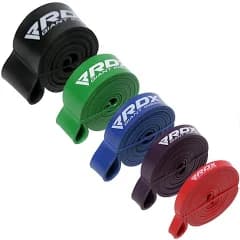
-
Loop a resistance band over the bar and place your feet or seat in the band for assistance
-
Extend your legs to a full L-sit position (90 degrees): the band helps support some body weight during the pull
-
The band assists most at the bottom and least at the top: expect the top portion and L-sit maintenance to be the hardest parts
-
Depress the shoulder blades, then pull the chest to the bar driving elbows down and back while holding legs at 90 degrees
-
Pull until chin clears the bar, hold briefly, then lower with control: maintain the L-sit on the way down
-
Do not let the band pull you into excessive back arch: keep the core tight and legs actively held in position
-
Progress to thinner bands: the goal is to transition to unassisted L-sit pull-ups with full leg extension
-
04 L-Sit Pull Ups
-
Hang from the bar and raise your legs to a full 90-degree L-sit: legs completely straight, toes pointed, held by hip flexor and core strength
-
This is the full expression of the exercise: it demands simultaneous pulling strength and strong isometric core/hip flexor endurance
-
Depress the shoulder blades, then pull the chest toward the bar driving elbows down and back: maintain the L-sit rigidly throughout
-
The forward center of gravity makes the top portion significantly harder than a regular pull-up: fight for every inch
-
Pull until chin clears the bar, hold briefly, then lower with control over 2 seconds back to full arm extension
-
Keep the legs perfectly still and at 90 degrees: any drop in leg position means the core is fatiguing and the rep quality is declining
-
Maintain a neutral spine throughout: do not round the lower back to hold the legs up
-
Common mistakes
Built into a program made for you
Every exercise here adapts to your goals, equipment and schedule inside the app.