German Hang Stretches
Muscles worked
- Chest
- Bicep
Equipment
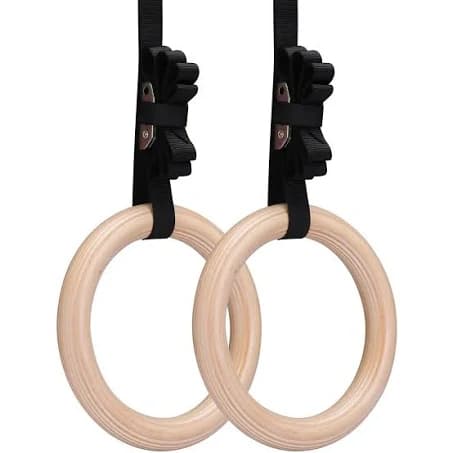
Form Cues
-
Grip the bar or rings with a wide overhand grip
-
Slowly lower yourself into the deepest position
-
Arms are fully extended overhead
-
Rotate your shoulders back so that your chest faces forward
-
Hold the position for 15-30 seconds
-
Lightly engage your trunk to protect the lower back
-
Breathe calmly and evenly during the stretch
-
Increase intensity slowly - this stretch is very intense
-
Use a box or bench for foot support if needed
Progressions
01 Standing German Hang
-
Stand facing away from a wall, chair, or set of chest-high rings, and place your hands behind your body on the surface with arms fully extended and palms flat.
-
Position your feet about hip-width apart with a slight forward lean so that your weight begins to shift away from your hands, creating an initial stretch through the chest and front shoulders.
-
Begin to lightly squat down, allowing your chest to travel forward and downward while keeping your elbows completely locked out straight.
-
Focus on drawing your shoulder blades together and keeping your shoulders externally rotated to protect the joint and maximize the stretch through the anterior deltoids and pectorals.
-
Gradually deepen the stretch by squatting lower and stepping your feet further forward, but only go as deep as you can maintain control without sharp pain.
-
Maintain a slight engagement in your core and glutes throughout the hold to prevent excessive arching of the lower back.
-
Breathe slowly and deeply: use each exhale to relax your chest muscles and sink a little deeper into the stretch.
-
Hold the deepest comfortable position for 15 to 30 seconds per set, then stand back up slowly to release the stretch in a controlled manner.
-
02 Seated German Hang
-
Sit on the floor with your legs extended straight in front of you, or slightly bent if hamstring tightness limits your positioning.
-
Place your hands flat on the floor behind your hips with your fingers pointing backward and your arms fully extended.
-
Gently press your chest forward and upward while keeping your arms locked straight, allowing your shoulders to move into extension and creating a deep stretch across the chest and front shoulders.
-
Keep your shoulder blades retracted and depressed: pull them together and down to ensure the stretch targets the correct muscles and protects the joint.
-
Slowly slide your hands further behind you to increase the stretch intensity, only going as far as you can without losing elbow lockout or experiencing sharp pain.
-
Maintain a light core engagement throughout the hold to prevent your lower back from collapsing into excessive extension.
-
Breathe deeply and rhythmically: exhale to relax your chest muscles and allow the stretch to deepen with each breath cycle.
-
Hold the stretched position for 15 to 30 seconds per set, then bring your hands back toward your hips slowly to release the stretch in a controlled manner.
-
03 Foot-Assisted German Hang
-
Grip a bar or rings with a shoulder-width overhand grip, then carefully rotate your body forward and under the bar so that your arms end up extended behind your body in the German Hang position.
-
Keep your feet firmly planted on the ground or on a raised platform such as a box or bench to support a portion of your bodyweight throughout the stretch.
-
Lower your hips gradually to increase the stretch through your chest and shoulders, using your legs to control exactly how much load your shoulders bear.
-
Maintain completely straight arms at all times: bending the elbows shifts the stretch away from the shoulder joint and reduces the effectiveness of the exercise.
-
Focus on keeping your shoulder blades retracted and your shoulders externally rotated to promote a safe and deep stretch through the anterior shoulder and pectoral muscles.
-
Engage your core lightly to prevent your lower back from arching excessively, which would take tension away from the target muscles.
-
Breathe calmly and steadily throughout the hold: use each exhale to relax into the stretch and allow your shoulders to open a little further.
-
Hold the position for 15 to 30 seconds per set, then push through your feet to stand back up slowly and release the stretch in a controlled manner.
-
04 German Plank
-
Grip a bar or rings with a shoulder-width overhand grip and rotate your body forward and under the apparatus so your arms extend behind your body in the German Hang position.
-
Instead of letting your body hang freely, engage your core, glutes, and shoulder muscles to hold your body in a rigid plank-like line parallel to the ground.
-
Keep your arms completely straight and locked out behind you: the combination of shoulder extension and active muscular engagement is what makes this variation uniquely challenging.
-
Squeeze your glutes and brace your abdominals to maintain a straight line from your shoulders through your hips to your feet, avoiding any sagging or piking at the hips.
-
Focus on actively pressing through the rings or bar to create tension in the posterior deltoids and upper back, rather than passively hanging in the stretched position.
-
Keep your shoulders externally rotated and your shoulder blades pulled together to stabilize the joint and protect against excessive stress on the ligaments.
-
Breathe steadily throughout the hold: avoid holding your breath, as this creates unnecessary tension and limits your ability to maintain the position.
-
Hold for 10 to 20 seconds per set initially, gradually building up hold time as your shoulder strength and extension mobility improve.
-
05 German Hang
-
Grip a bar or rings with a shoulder-width overhand grip, pull yourself up and over, then slowly lower your body until your arms are fully extended behind you with your chest facing upward: this is the full German Hang.
-
Allow your entire bodyweight to load into the stretch, keeping your arms completely straight and locked out at all times.
-
Maintain a light active engagement through your shoulder muscles rather than hanging purely on passive structures: think of gently pulling the rings or bar apart to create external rotation tension.
-
Keep your legs together and your body relatively straight, avoiding excessive swinging or twisting that could destabilize the shoulder joint.
-
Focus on keeping your shoulder blades retracted and drawn together behind you to protect the joint capsule and promote a balanced stretch across the chest and front shoulders.
-
Breathe slowly and deeply throughout the hold: each exhale should help your chest and shoulder muscles relax further, allowing you to sink deeper into the stretch over time.
-
Hold the position for 15 to 30 seconds per set, building up gradually as your shoulder extension mobility improves with consistent practice.
-
To exit the position safely, tuck your knees to your chest and rotate forward to return to a normal hang, or use foot support if available, never release the grip suddenly.
-
Common mistakes
Built into a program made for you
Every exercise here adapts to your goals, equipment and schedule inside the app.