Front Lever Row Progressions
Muscles worked
- Rear Shoulder
- Middle Traps
- Trapezius
- Lat
- Forearm Flexors
- Rear Neck
- Side Shoulder
- Bicep
Equipment
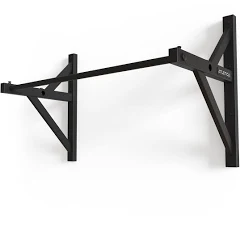
Form Cues
-
Start in your front lever position with retracted and depressed shoulder blades: maintain a posterior pelvic tilt by engaging the abs
-
Initiate the row by driving the elbows back while keeping the body perfectly horizontal: pull until the bar touches your stomach or lower chest
-
Hold the top position briefly with shoulder blades fully retracted, then lower with control over 2 seconds to full arm extension
-
Maintain ab tension and posterior pelvic tilt throughout: the hips must stay level with the shoulders at all times
-
Do not use momentum or swing: every rep starts from a dead hang with arms fully locked out
-
The front lever row combines the isometric demands of a front lever hold with the dynamic demands of a row: it is one of the most challenging bodyweight pulling exercises
-
With a resistance band, attach it at the hip so it pulls straight up, and keep it light enough that it puts you only 1 to 3 progressions above your unassisted level
Progressions
01 Negative Tuck Front Lever Rows
-
Start at the top position of a tuck front lever row: pull yourself into a tuck front lever with the bar at your stomach and hold
-
From the top, lower yourself slowly and under control over 2-3 seconds to full arm extension while maintaining the tight tuck position
-
Keep the knees pulled tight to your chest and the body horizontal throughout the entire descent: do not let the hips drop
-
Maintain shoulder depression and scapular retraction as long as possible during the lowering phase
-
Once at the bottom with arms fully extended, use a kip or swing to return to the top position if you cannot yet pull concentrically
-
This is an entry-level front lever row progression: the negative-only approach builds the eccentric strength needed for full reps
-
02 Tuck Front Lever Rows
-
Assume a tight tuck front lever with knees pulled as close to the chest as possible: the tighter the tuck, the shorter the lever and the easier the row
-
Maintain the compact tuck position throughout the entire pull and return: do not let the knees drift away from the chest
-
Pull the bar toward your stomach by driving the elbows back, keeping the body horizontal and shoulders depressed
-
Squeeze the shoulder blades together at the top, hold briefly, then lower with control over 2 seconds to full arm extension
-
At the bottom, arms must be fully locked out before initiating the next rep, no partial reps
-
Keep strong ab tension and posterior pelvic tilt throughout: the hips must not drop below or rise above shoulder level
-
03 L Front Lever Rows
-
Hang from the bar or rings and bring your legs straight out in front to a 90-degree angle at the hips: this is the L front lever position
-
The L position creates a moderate lever: harder than a tuck but easier than full extension, and it heavily challenges the hip flexors and abs
-
Maintain the 90-degree hip angle throughout the entire row: do not let the legs drop below horizontal or pike upward
-
Pull the bar toward your stomach by driving the elbows back while keeping the upper body parallel to the ground
-
Squeeze the shoulder blades together at the top, hold briefly, then lower with control over 2 seconds to full arm extension
-
The hip flexor demand is significant: if the legs start dropping during the set, regress to the advanced tuck progression
-
04 Advanced Tuck Front Lever Rows
-
Assume the advanced tuck front lever: hips extended to roughly 90 degrees with knees still bent, creating a longer lever than the basic tuck
-
The wider hip angle significantly increases the demand on the back and core compared to the basic tuck: keep the hips level with shoulders at all times
-
Pull the bar toward your stomach by driving the elbows back while maintaining the advanced tuck position throughout
-
Squeeze the shoulder blades together at the top, hold briefly, then lower with control over 2 seconds to full arm extension
-
The temptation to arch the back increases with this progression: maintain the posterior pelvic tilt and keep abs engaged
-
If you cannot maintain the advanced tuck position during the row, regress to the basic tuck until you build sufficient strength
-
05 One Leg Tuck Front Lever Rows
-
Extend one leg fully while keeping the other knee tucked tight to the chest: this creates an asymmetric lever that is harder than the advanced tuck
-
The extended leg increases the lever length significantly: keep it straight and in line with the torso at all times
-
The asymmetric loading creates a rotational force: brace the core hard to keep the body level and prevent twisting
-
Pull the bar toward your stomach by driving the elbows back while maintaining the one-leg position throughout
-
Squeeze the shoulder blades together at the top, hold briefly, then lower with control over 2 seconds to full arm extension
-
Alternate which leg is extended between sets to develop balanced strength on both sides
-
06 Advanced One Leg Tuck Front Lever Rows
-
One leg fully extended, the second leg nearly extended with only a slight bend: this creates a lever very close to the full straddle or full front lever
-
Both legs should be approximately horizontal and in line with the torso: the nearly-extended second leg provides only minimal mechanical advantage
-
This is a key bridging progression to the straddle: the demands on the back and core are very close to the full straddle front lever row
-
Pull the bar toward your stomach by driving the elbows back while keeping both legs in position throughout
-
Squeeze the shoulder blades together at the top, hold briefly, then lower with control over 2 seconds to full arm extension
-
If the nearly-extended leg starts to bend more during the set, the progression is too advanced: go back to the standard one-leg version
-
07 Straddle Front Lever Rows
-
Assume the straddle front lever position with both legs fully extended and spread wide apart: point the toes for a clean line
-
The wider the straddle, the shorter the effective lever and the easier the row: narrow the straddle over time as you get stronger
-
Both legs must stay fully straight and horizontal throughout: do not let them drop below the torso line
-
Pull the bar toward your stomach by driving the elbows back while maintaining the straddle position: keep the body perfectly parallel to the ground
-
Squeeze the shoulder blades together at the top, hold briefly, then lower with control over 2 seconds to full arm extension
-
This is a near-full-lever progression: the strength demands are close to the full front lever row, especially with a narrow straddle
-
08 Front Lever Rows
-
This is the most demanding progression: both legs together, fully extended, body forming a perfectly straight line from head to toes parallel to the ground
-
Every muscle must be engaged: abs for posterior pelvic tilt, glutes and quads to keep legs straight and elevated, lats and back for the pull, shoulders depressed
-
Pull the bar toward your stomach by driving the elbows back while maintaining the perfect straight body line: the hardest part is staying horizontal during the pulling motion
-
Squeeze the shoulder blades together at the top, hold briefly, then lower with control over 2 seconds to full arm extension
-
At the bottom, arms must be completely locked out with the body still perfectly horizontal before starting the next rep
-
If the body line breaks at any point (hips dropping, legs falling, back arching) the rep does not count, regress to the straddle version
-
Common mistakes
Built into a program made for you
Every exercise here adapts to your goals, equipment and schedule inside the app.