Front Lever Raise Progressions
Muscles worked
- Lat
- Trapezius
- Tricep
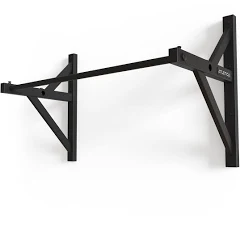
Equipment
Form Cues
-
Start from a dead hang with arms fully extended and shoulder blades actively depressed and retracted
-
Keep your arms completely straight and elbows locked throughout the entire movement: any bend turns this into a pull-up variation
-
Pull through the lats to raise your body from the hang toward horizontal: think about pressing the bar toward your hips
-
Maintain a posterior pelvic tilt and tight abs to prevent your hips from piking or sagging as you approach horizontal
-
Squeeze your glutes and quads to keep the legs locked in position according to the current progression
-
Lower with control over 2 seconds back to the dead hang: the eccentric phase is where much of the strength is built
-
Do not use any momentum or swing to initiate the raise: all force should come from the lats and scapular muscles
-
Full range is pulling from the dead hang all the way up until you touch the bar, then lowering back to a full hang: this holds for every progression
-
With a resistance band, attach it at the hip so it pulls straight up, and keep it light enough that it puts you only 1 to 3 progressions above your unassisted level
Progressions
01 Negative Tucked Front Lever Raise
-
Start in an inverted hang (upside down) with knees tucked tightly to your chest
-
With arms straight and elbows locked, slowly lower your body from the inverted position toward a horizontal tucked front lever
-
Control the descent over 2 seconds: resist gravity through lat and scapular engagement the entire way down
-
Reach the horizontal tucked position with your back parallel to the ground, then pull back up to the inverted hang
-
Keep knees pulled tight to the chest throughout: the tighter the tuck, the easier the leverage
-
Maintain depressed shoulder blades and a posterior pelvic tilt at all times
-
This is the entry-level progression: focus on mastering the slow, controlled negative before moving on
-
02 Tucked Front Lever Raise
-
Start from a dead hang with arms straight, shoulder blades depressed, and knees tucked tightly to the chest
-
Pull through the lats with straight arms to raise your body from the hang to a horizontal tucked front lever position
-
Keep knees close to the chest throughout: the tighter the tuck, the shorter the lever arm and the easier the movement
-
At the horizontal position, your back should be parallel to the ground with hips level: hold briefly
-
Lower with control over 2 seconds back to the dead hang without losing the tuck
-
Focus on driving the movement from the lats and scapular depression: avoid bending the elbows
-
If you cannot reach horizontal without piking or bending the arms, work more on the negative tucked variation
-
03 Adv. Tucked Front Lever Raise
-
Start from a dead hang with arms straight and shoulder blades depressed: tuck your knees but open the hip angle to about 90 degrees, extending the thighs away from the torso
-
Pull through the lats with straight arms to raise your body to horizontal: the extended hip angle creates a longer lever, making this significantly harder than the tucked version
-
At horizontal, your thighs should point downward at roughly 90 degrees from your torso rather than being tucked tight to the chest
-
Maintain a posterior pelvic tilt and tight core: the opened hip makes it tempting to arch the lower back
-
Hold briefly at horizontal, then lower with control over 2 seconds back to the dead hang
-
Keep elbows locked and drive the movement purely through the lats, no arm bending allowed
-
If you cannot maintain the hip angle without piking during the raise, return to the standard tucked version
-
04 One Leg Front Lever Raise
-
Start from a dead hang with arms straight and shoulder blades depressed: extend one leg fully while tucking the other knee to your chest
-
Pull through the lats with straight arms to raise your body to horizontal: the extended leg creates a longer lever on one side, significantly increasing the load
-
At horizontal, the extended leg should be in line with your torso while the tucked knee stays close to the chest
-
Keep the hips level: the asymmetric leg position tends to make the body rotate; actively resist this by engaging the core
-
Maintain a posterior pelvic tilt and tight glutes on the extended leg to prevent the hip from sagging
-
Lower with control over 2 seconds back to the dead hang, maintaining the leg position throughout
-
Alternate which leg is extended each set to develop both sides evenly
-
05 Adv. One Leg Front Lever Raise
-
Start from a dead hang with arms straight and shoulder blades depressed: extend one leg fully while the other leg is only slightly bent at the knee, nearly extended
-
Pull through the lats to raise your body to horizontal: the nearly extended second leg creates a much longer overall lever than the standard one-leg version
-
At horizontal, both legs should be nearly in line with the torso: only a slight knee bend on the non-working leg differentiates this from a full front lever raise
-
The increased lever demands significantly more lat and core strength: maintain aggressive posterior pelvic tilt to prevent hip sag
-
Keep the hips level and resist rotation caused by the slight asymmetry between legs
-
Lower with control over 2 seconds, maintaining the leg positions throughout the descent
-
This is the bridge to the pike straddle and straddle variations: if you cannot hold horizontal, return to the standard one-leg version
-
06 Pike Straddle Front Lever Raise
-
Start from a dead hang with arms straight and shoulder blades depressed: spread your legs wide into a straddle with a slight knee bend (pike)
-
Pull through the lats with straight arms to raise your body to horizontal: the straddled legs with slight pike shorten the lever compared to a full straddle
-
At horizontal, your legs should be spread wide with a slight bend at the knees and hips: the wider the straddle, the shorter the effective lever
-
Maintain a strong posterior pelvic tilt: the pike straddle position tempts you to arch the lower back to compensate
-
Keep the shoulder blades firmly depressed and retracted throughout: do not let them elevate as you approach horizontal
-
Lower with control over 2 seconds back to the dead hang, maintaining the straddle position throughout
-
If you find yourself piking excessively at the hardest point (near horizontal), reduce the straddle width or return to the adv. one-leg version
-
07 Straddle Front Lever Raise
-
Start from a dead hang with arms straight and shoulder blades depressed: spread your legs wide into a full straddle with knees and hips fully extended
-
Pull through the lats with straight arms to raise your body to horizontal: the fully extended straddle legs create a significant lever requiring strong lats and core
-
At horizontal, keep the legs wide, straight, and at the same height as your torso: point the toes for full leg engagement
-
Maintain an aggressive posterior pelvic tilt: the longer lever of straight legs strongly tempts the lower back to arch
-
Squeeze the glutes and quads to keep the legs locked straight: any knee bend reduces the training effect
-
Lower with control over 2 seconds back to the dead hang, maintaining the straddle throughout
-
Progressively narrow the straddle width over time as you build strength toward the full front lever raise
-
08 Almost Full Front Lever Raise
-
Start from a dead hang with arms straight and shoulder blades depressed: keep legs together or only very slightly apart, fully extended
-
Pull through the lats with straight arms to raise your body to horizontal: the nearly full extension creates a lever close to the full front lever raise
-
At horizontal, your body should form a nearly straight line from shoulders to toes with legs only minimally apart
-
This progression demands near-maximum lat and core strength: maintain an aggressive posterior pelvic tilt to prevent any hip sag or lower back arch
-
Squeeze the glutes, quads, and point the toes to maintain full body tension from head to feet
-
Lower with control over 2 seconds, resisting gravity through the hardest portion near horizontal
-
Progressively bring the legs closer together as you build the strength for the full front lever raise
-
09 Front Lever Raise
-
Start from a dead hang with arms straight and shoulder blades depressed: legs together and fully extended
-
Pull through the lats with straight arms to raise your entire body to a perfectly horizontal position: this is the full front lever raise with maximum lever length
-
At horizontal, your body must form a perfectly straight line from shoulders through hips to pointed toes, no pike, no arch, no sag
-
This demands maximum total body tension: squeeze the glutes and quads hard, engage the core aggressively, maintain a strong posterior pelvic tilt
-
Hold the horizontal position briefly, then lower with control over 2 seconds back to the dead hang
-
The hardest portion is transitioning through the angle near horizontal: do not use any momentum or swing to power through this sticking point
-
If you cannot maintain a straight body line throughout the full range of motion, continue working on the almost full or straddle variations
-
Common mistakes
Built into a program made for you
Every exercise here adapts to your goals, equipment and schedule inside the app.