Back Bridge Progressions
Muscles worked
- Back Extensors
- Front Shoulder
- Gluteus
- Serratus
- Trapezius
- Side Shoulder
- Abs
- Hip Flexors
- Lat
Form Cues
-
The primary driver in every bridge variation is the glutes: squeeze them hard to lift the hips and protect the lower back.
-
Drive through your heels rather than your toes to maximise glute activation.
-
Keep your knees hip-width apart and tracking over your toes; do not let them cave inward.
-
Aim for a straight line from shoulders to knees at the top: avoid overarching the lower back.
-
Keep your shoulders depressed (down and away from the ears) to protect the neck.
-
Breathe calmly and with control throughout every hold and rep.
-
Progress gradually through the variations: move to the next level only when you can hold the current one with solid form.
-
Stop if you feel sharp pain or pinching in the lower back; this usually means the glutes need more activation.
Progressions
01 T-Bridge Wall
-
Stand facing a wall with your feet shoulder-width apart, about an arm's length away.
-
Place your hands flat on the wall at shoulder height, fingers pointing upward.
-
Walk your feet back slightly until your body forms a straight line from hands to heels, leaning into the wall.
-
Engage your glutes and core, then push your hips forward toward the wall to create a gentle back extension.
-
Your body should form a T-shape when viewed from the side: arms horizontal, torso and legs in a straight line.
-
Squeeze your glutes hard at the top of the movement; the extension should come from the hips, not the lower back.
-
Hold for the prescribed time, breathing steadily: exhale as you push forward, inhale as you ease back.
-
Keep your shoulders pressed down away from your ears throughout the hold.
-
02 T-Bridge Box
Box / Bench / Step / Chair / etc.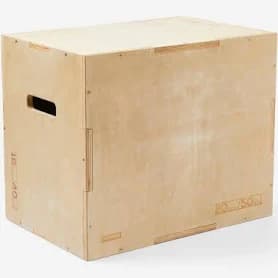
-
Sit on the ground in front of a sturdy box or bench with your back resting against it.
-
Place your hands on the edge of the box behind you, fingers pointing toward your body, grip firm.
-
Bend your knees and place your feet flat on the ground, hip-width apart.
-
Press through your hands and feet to lift your hips toward the ceiling, creating a T-shape with your body.
-
Squeeze your glutes hard at the top: your body should form a straight line from shoulders to knees.
-
Keep your shoulders depressed (down and away from your ears) to avoid neck tension.
-
Hold for the prescribed time, breathing steadily; do not let your hips sag.
-
Lower back down with control; avoid dropping suddenly.
-
03 T-Bridge Floor
-
Lie on your back with your arms extended out to the sides at shoulder height, palms facing down (forming a T-shape).
-
Bend your knees and place your feet flat on the ground, hip-width apart, close enough that your shins are roughly vertical at the top.
-
Drive through your heels to lift your hips off the floor, engaging your glutes and core.
-
At the top, your body should form a straight line from your shoulders to your knees, no sagging or overarching.
-
Squeeze your glutes hard and hold for the prescribed time; the T-arm position provides stability.
-
Keep your knees tracking over your toes: do not let them collapse inward.
-
Breathe steadily throughout the hold: exhale as you lift, breathe normally while holding.
-
Lower back down with control, touching your glutes to the floor briefly before the next rep.
-
04 Wall Bridge Rotation
-
Stand with your back about 30 cm from a wall, feet shoulder-width apart, knees slightly bent.
-
Engage your core and begin rotating your torso to one side, reaching your hands back toward the wall.
-
As you rotate, push your hips forward and place both hands on the wall behind you, entering a supported bridge position.
-
Hold briefly at the wall, squeezing your glutes and opening through the chest and shoulders.
-
Return to the starting position by rotating back the way you came, maintaining control throughout.
-
Alternate sides with each rep to develop rotational mobility evenly.
-
Move slowly and deliberately: this progression combines rotation with extension, so control is essential.
-
Breathe steadily; exhale as you rotate into the bridge, inhale as you return.
-
05 Feet Elevated Bridge Hold
-
Lie on your back with your feet on an elevated surface (bench, step, or sturdy chair), knees bent, feet hip-width apart.
-
The elevation increases the range of motion and demands more from your glutes and core.
-
Drive through your heels to lift your hips toward the ceiling, keeping your shoulders and upper back on the floor.
-
At the top, your body should form a straight line from shoulders to knees: squeeze your glutes hard.
-
Hold for the prescribed time; do not let your hips drop or your lower back overarch.
-
Keep your knees tracking over your toes and pressing slightly outward.
-
Breathe steadily throughout: exhale as you lift, breathe normally while holding.
-
If the elevation feels too demanding, use a lower surface and build up gradually.
-
06 Floor Bridge
-
Lie on your back with your knees bent and feet flat on the ground, hip-width apart, heels close to your glutes.
-
Place your arms at your sides with palms pressing into the floor for stability.
-
Drive through your heels and squeeze your glutes to lift your hips off the floor.
-
At the top, form a straight line from your shoulders to your knees: avoid overarching the lower back.
-
Hold the bridge for the prescribed time, maintaining maximum glute tension throughout.
-
Keep your shoulders relaxed and pressed into the floor; do not push from the neck.
-
Your knees should stay hip-width apart: actively press them slightly outward.
-
Breathe steadily; lower back down with control when the hold is complete.
-
Common mistakes
Built into a program made for you
Every exercise here adapts to your goals, equipment and schedule inside the app.